
Guides and Bucket Lists
The best guides to Sal Island combine popular highlights with local insight, helping visitors discover both iconic sites and quieter corners of island life.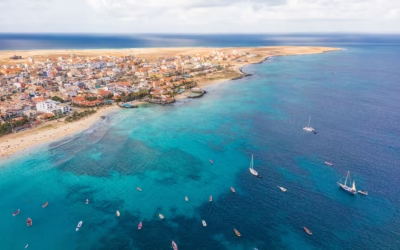
The Best Tourist Attractions of Sal Island: Complete Guide
Attractions: Sal Island is a great destination for active travellers, thanks to its blend of water sports, outdoor adventures, and relaxed leisure options.

Before You Go: Planning Your Great Sal Experience
Lazy leisure and water sports, simple adventure activities and reliable sunshine. For visitors seeking those experiences, Sal island delivers consistently.
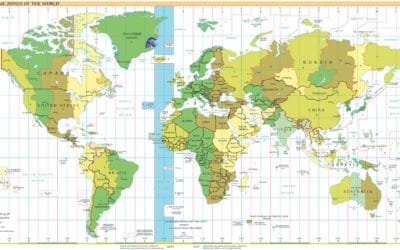
What’s the Time in Cape Verde Now? Life in UTC-01:00
Check the time in Cape Verde now: The clocks on the archipelago read one hour behind Greenwich Mean Time. Cape Verde Time(CVT) is fixed at UTC−1.
Helpful Guides for Sal, Cape Verde
Guides and bucket lists for Sal Island in Cape Verde revolve around the island’s unique contrast between its dry, lunar landscape and the vitality of its beaches, towns, and local life. Travellers are drawn first to Santa Maria, where a relaxed atmosphere meets colourful markets, open-air restaurants, and the long sweep of white sand along the Atlantic.
Typical lists include swimming in the natural pools at Buracona, walking out to the old salt flats of Pedra de Lume, or watching young lemon sharks in the shallows of Shark Bay. But beyond these headline sites, well-informed guides also suggest slower moments — sunset in Murdeira Bay, a morning coffee in Palmeira’s fishing port, or a visit to a village football match inland.
Whether planning short visits or extended stays, good guides help visitors find a balance between seeing what’s expected and discovering what’s quiet, local, and still slightly hidden.
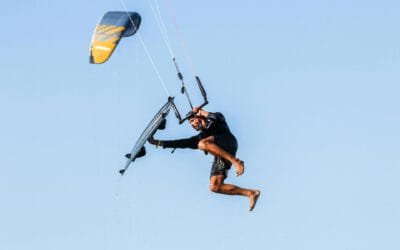
Kitesurfing on Sal Island: All You Need To Know
Sal has become a world-class kitesurfing destination, blessed with consistent trade winds, warm temperatures, and a laid-back atmosphere.
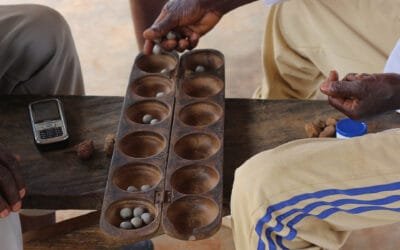
How to Play Ouril: Rules of The Traditional Game
Ouril (also spelt ouri, uril, urim, or ori depending on the island) is a traditional Cape Verdean board game of the mancala family. It was brought to Cabo Verde by enslaved people from West Africa and has been passed down through generations. The game is especially popular among men, often played in public squares and port towns, such as Mindelo (São Vicente). In essence, Ouril is a two-player strategy game where each player “sows” seeds and captures the opponent’s seeds to gain an advantage. Below is a comprehensive guide in two parts: first, a beginner-friendly walk-through of rules and gameplay; second, advanced tips on strategy and regional variations (including notes on the island of Sal).
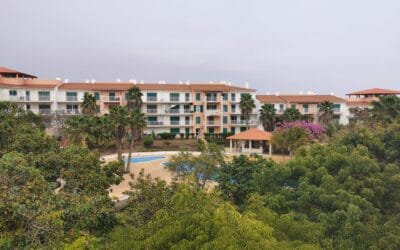
Where to Stay on Sal? The Best Options with Prices
Where to stay on Sal? The question presents itself immediately upon arrival at Amílcar Cabral International Airport. This easternmost island of Cape Verde, shaped by wind and salt, offers surprisingly diverse accommodation options across its compact 216 square kilometres. From the bustling town of Santa Maria, through the calm and quiet Vila Verde, to the island’s capital — Espargos; each area presents a different set of advantages for various types of travellers.
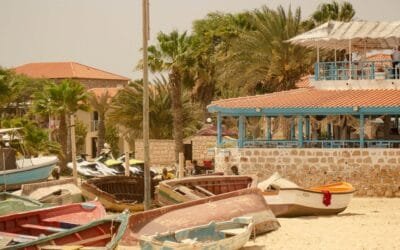
Santa Maria: Walk Through The Most Popular Town
Santa Maria is a coastal town at the southern tip of Sal Island in Cape Verde, renowned for its stunning white-sand beaches and year-round sunshine. Once a sleepy fishing and salt-trading village, it has transformed into the island’s central tourist hub, while retaining a laid-back charm.

The Most Popular Souvenirs to Look For in Cape Verde
Shopping on Sal is less about high-street brands and more about discovering local crafts, fresh produce, and Cape Verdean character.
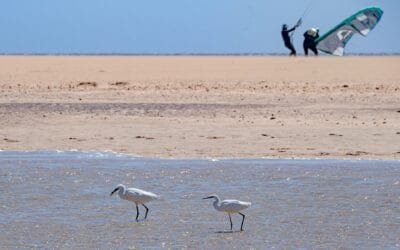
Birds of Cabo Verde: The Most Popular Species
Cabo Verde is an ornithologists’ paradise. It is a fantastic place for birdwatching. There are many bird species here, both native only to the islands of the archipelago (and nowhere else) and many typically African and migratory species. Below is a list of over 20 bird species observed on Sal and the other islands. How many of them have you seen?

Digital Nomads: What’s the Best Place To Stay On Sal?
The rise of remote work is transforming Sal from a week-long beach destination into a viable base for location-independent professionals. However, success requires careful planning around the island’s infrastructure limitations and lifestyle adjustments.
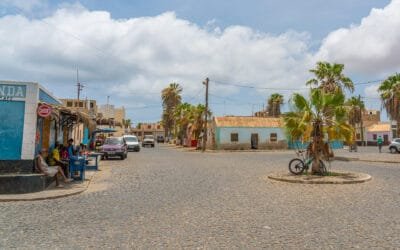
Palmeira: The Most Important Port on Sal Island
[pac_divi_table_of_contents default_state="closed" level_markers_1="none" level_markers_2="decimal" level_markers_3="whole" _builder_version="4.27.4" _module_preset="default" custom_margin="0px||||false|false" custom_padding="0px||||false|false"...
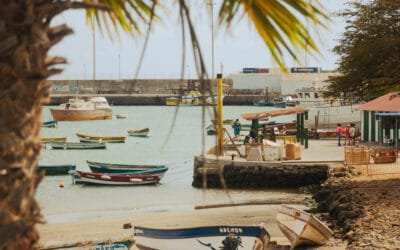
Palmeira: The Important Fishing Village of Sal
Tucked away on the windswept western coast of Sal Island, Palmeira is not the place you visit for palm-lined beaches or polished resorts.
Cape Verde: The Practical Guide with Essential Insights
Cape Verde: Nestled 600 km off the West African coast lie ten volcanic islands united in history, culture, and climate — yet each with its own character.
Sal Low-Cost: How to Have a Great Stay on Low Budget
Sal’s reputation as an expensive island can be a challenge for budget travellers, but strategic choices enable meaningful experiences without financial strain.
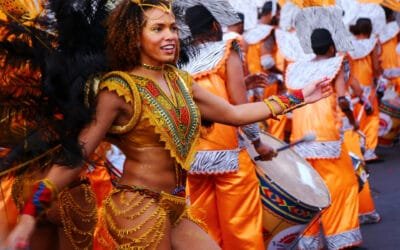
List of Most Important Events, Festivals and Holidays
[pac_divi_table_of_contents default_state="closed" included_headings="on|on|on|off|off|off" level_markers_1="none" level_markers_2="decimal" level_markers_3="whole" _builder_version="4.27.4" _module_preset="default" custom_margin="0px||||false|false"...

Video: Learn Cape Verdean Creole Alphabet Easily
The only writing system officially recognised by the authorities in Cape Verde is called the Alfabeto Unificado para a Escrita da Língua Cabo-verdiana (ALUPEC), which translates to ‘Unified Alphabet for the Writing of the Cape Verdean Language’. It’s a phonetic...
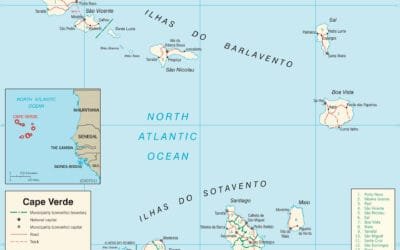
Cabo Verde in a Nutshell: History, Culture, Politics & Art
Cape Verde comprises ten islands, of which nine are inhabited, and is located 375 miles (600 kilometres) off the coast of Senegal. The combined area of all the islands is 1,557 square miles (4,033 square kilometres), roughly the size of Rhode Island. The islands vary in geographical characteristics. Sal, Boavista, Maio, and São Vicente are flat and desert-like, with stretches of dunes. Santiago, Santo Antão, Fogo, and São Nicolau are more mountainous and arable, although all the islands have a long history of drought. They are all of volcanic origin; Fogo, the only volcano that is still active, last erupted in 1995. The capital, Praia, is on the island of Santiago, which is the largest in terms of area and population and the first settled.

Escudos: All You Need to Know About The Currency
Cape Verde, officially known as the Republic of Cabo Verde, has its own currency known as the Cape Verdean Escudo (CVE). Here are some key details about the Cape Verdean currency.
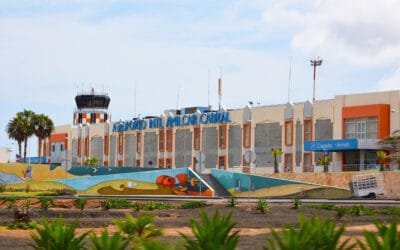
Amílcar Cabral International Airport: All You Need To Know
[pac_divi_table_of_contents default_state="closed" included_headings="on|on|on|off|off|off" level_markers_1="none" level_markers_2="decimal" level_markers_3="whole" _builder_version="4.27.4" _module_preset="default" custom_margin="0px||||false|false"...