Related Posts
All The Natural Wonders: Amazing Ecosystem of Sal
Sal Island – aptly named for its salt – holds one of Cape Verde’s most surprising ecosystems. From an ancient volcanic crater turned salt lake to shimmering desert mirages, and from tenacious desert flora to thriving coral reefs and turtle-nesting beaches, Sal is a living museum of geological marvels, unique ecosystems, and surprising biodiversity.
Volcanic Origins and Otherworldly Salt Flats
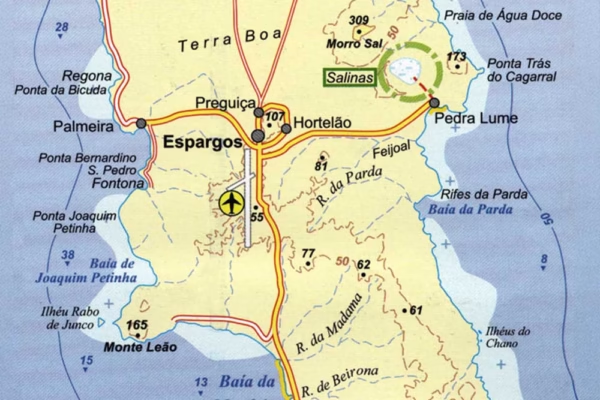
Sal’s story begins millions of years ago under the ocean. The island was born from submarine volcanic eruptions and is among the oldest in the Cape Verde archipelago. Over aeons, erosion wore down Sal’s volcanoes into a near-flat landscape – its highest point, Monte Grande, is a mere 406 meters tall. Yet remnants of its fiery birth remain visible. Pedra de Lume, an extinct volcano on Sal’s northeast, holds a spectacular surprise: a sunken crater filled with salt.
Inside Pedra de Lume’s volcanic crater, seawater seeping through the rock has evaporated, forming Sal’s famed salt flats. Layers of white, rose, and orange salt crust create a patchwork across the crater floor, ringed by dark basalt walls. The old wooden salt infrastructure (right) harkens back to the island’s 19th-century “white gold” rush.
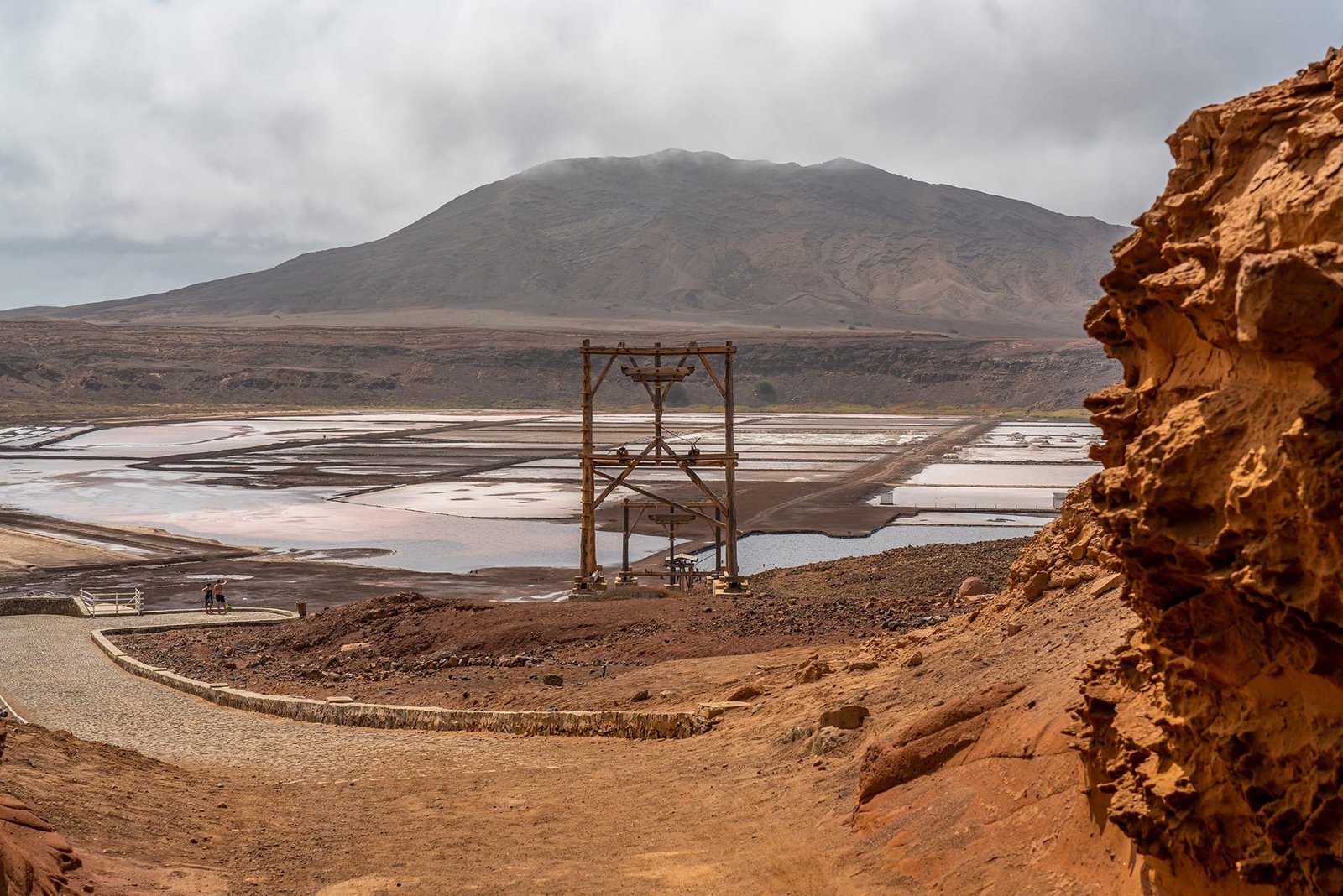
At Pedra de Lume, the crater lies about 39 meters below the surrounding terrain and was once connected to the sea through natural channels. Ocean water still infiltrates the porous lava, collecting in pans that evaporate under the tropical sun, leaving behind glittering salt crystals. The result is an otherworldly salt pan mosaic – delicate pink and white pools set in black volcanic rock. The site’s uniqueness has led to its being proposed for UNESCO World Heritage status. Visitors here can literally immerse themselves in geology: the hypersaline lagoon in the crater lets you float effortlessly, Dead Sea-style, thanks to the dense salt water. It’s both a fun spa-like experience and a lesson in natural mineral physics.
Sal’s salt flats aren’t just pretty – they shaped the island’s history. In the 1800s, Pedra de Lume’s salt was mined and exported globally, giving Sal (which means “salt” in Portuguese) its name and early economy. Today, the old mining machinery stands silent, and the crater is protected as a natural heritage site. But the magic remains: when sunlight hits the saline pools, they can glow in hues of coral-pink or white, depending on algae and mineral content, making the crater look like a giant artist’s palette.
Buracona’s Lava Pools and the “Blue Eye”
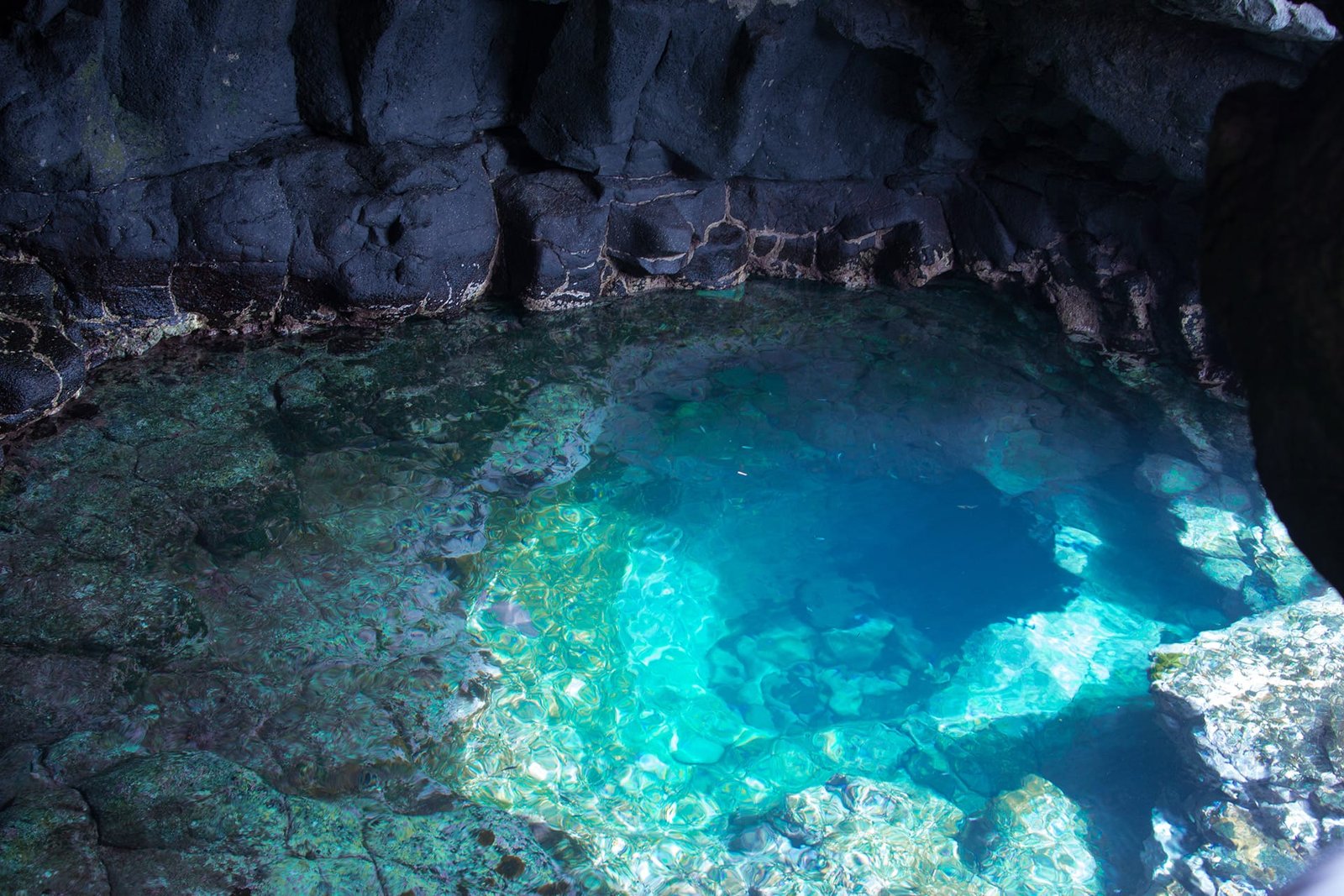
Not all of Sal’s volcanic wonders are dry. On the northwest coast, Buracona presents a rugged lava shoreline where the Atlantic crashes into basalt cliffs. Among Buracona’s caves and rock pools is one especially enchanting spot: the “Blue Eye”, or Olho Azul. At first, it’s just a round hole in the dark lava shelf, with waves swirling below. But late in the morning, when the sun reaches the right angle, a beam of light shoots through a submerged tunnel and ignites the water into a neon-blue orb. For a few hours, the cave’s interior glows like an azure eye staring up from the Earth – a natural optical illusion caused by sun, sea, and volcanic rock.
Geologically, the Blue Eye is the collapse of a lava tube – a hollow left when molten lava flowed and drained away. Over time, the roof caved in, opening this window to the ocean. The visual effect is fleeting and seasonal (best seen around midday in summer), which only adds to its mystique. Those who time it right are rewarded with a sight that feels almost supernatural. Surrounding the Blue Eye, Buracona offers a natural lava swimming pool where you can take a dip on calm days, as well as a small cultural museum and panoramic views of black rock against bright surf. The Buracona-Ragona protected landscape spans about 5.5 km² here, conserving not just the Blue Eye but also coastal scrub habitat and tide pools teeming with little fish and crabs. It’s a reminder that Sal’s volcanic past continues to shape present-day beauty – from salt plains to sea caves – in spectacular ways.
Sunlight creates the famed “Blue Eye” in a sea cave at Buracona. The effect occurs when rays illuminate the water through a lava tube opening, reflecting sky-blue light back up. For a brief midday moment, the dark grotto comes alive with an intense turquoise glow, as if an eye is peering out from the depths.
Desert Flora: Life on the Salted Sands
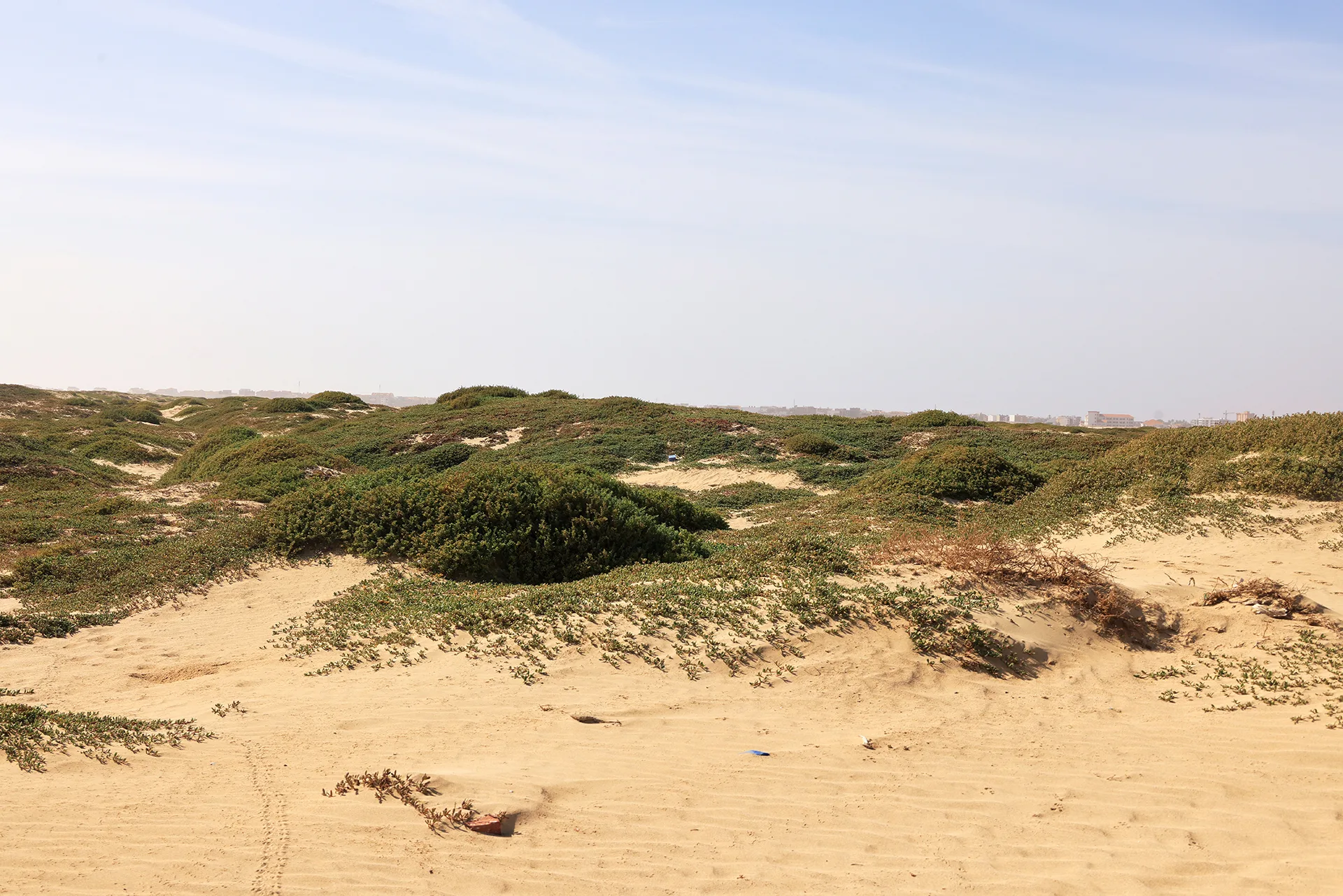
Despite its barren appearance, Sal Island hosts a unique desert ecosystem. Rainfall here averages under 100 mm a year, often arriving only in brief showers (if at all) between August and October. The land is flat and relentlessly dried by the sun and trade winds that also coat everything in salt spray. It’s the kind of environment where most plants struggle – yet, remarkably, some hardy and endemic flora have adapted and even thrive. Sal is a living laboratory of botanical survival.
Centuries of isolation have produced a handful of Cape Verde–endemic plants found only on these islands. On lush mountainous islands like Santo Antão, dozens of endemic species crowd the valleys. On Sal’s hostile flats, by contrast, just a few specialised species make a living – but their adaptations are extraordinary. For instance, the Cape Verde date palm (Phoenix atlantica), locally called tamareira, defies what a palm is supposed to do. It often grows in clumps of multiple trunks for mutual support, and it drills roots into Sal’s brackish groundwater lens. These palms can tap into salty subsoil water that would kill most plants, essentially filtering out salt and tolerating extreme osmotic stress. Genetic studies show P. atlantica is a distinct species – one tough enough for Sal’s conditions, whereas even its close relative, the cultivated date palm, would perish in days here.
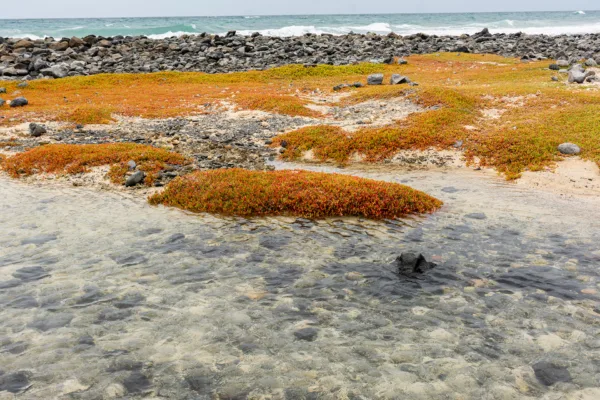
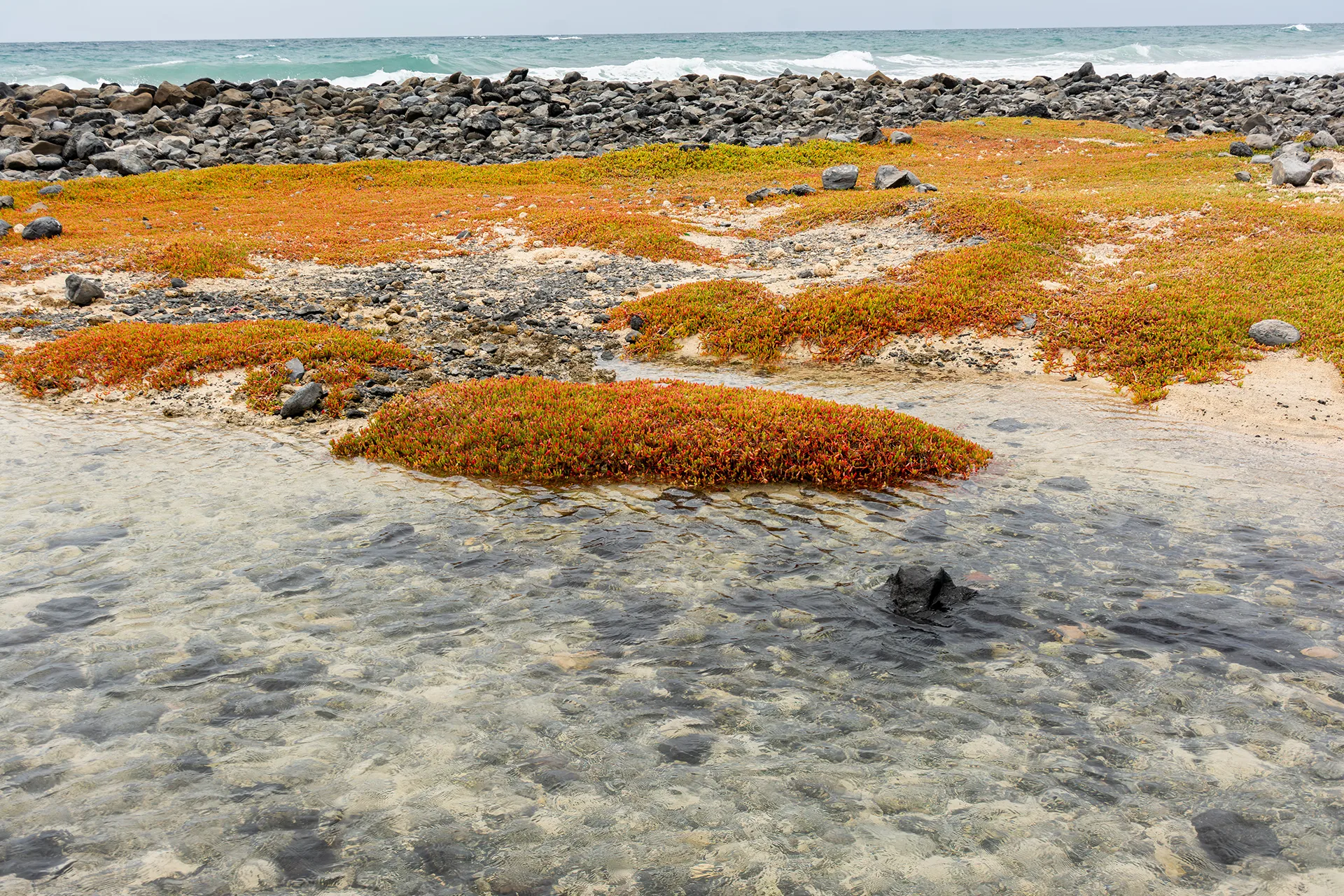
Alongside the palms are succulents and shrubs that are masters of drought. Spurge species like Euphorbia tuckeyana store water in fleshy tissues and exude toxic latex to deter herbivores. In wet years, the sandy plains can sprout the ghostly desert hyacinth (a parasitic bloom locals liken to an alien plant). Near the coasts, salt-tolerant plants form low mats – saltworts and sea purslane – effectively drinking seawater and expelling the salt. Even in the salinas (salt marshes), one finds halophytic (salt-loving) greenery edging the pools. These plant communities not only stabilise dunes and prevent erosion, but they also provide food and shelter for insects, lizards, and birds in an otherwise sparse habitat.
It’s a sparse landscape, yes – you might walk for minutes seeing mostly sand, rock, and the occasional thorny bush. But each plant you do find is a small miracle of evolution. Sal’s flora has learned to wring life from desiccation: some have deep roots to find hidden moisture, others have tiny salt-excreting leaves or go dormant until a rare rain awakens them. This makes Sal’s desert bloom in subtle ways. In years when a bit of rain does fall, the island can even flush green for a short time, as dormant seeds of grasses and wildflowers briefly spring to life. In the big picture, these adaptations are not just botanical curiosities – they represent genetic treasure troves. Scientists note that Sal’s native plants, having overcome extreme drought and salinity challenges, could inform crop breeding for salt tolerance. The resilience of Sal’s endemic flora is a testament to nature’s tenacity, turning a seemingly lifeless salt desert into a garden of tough survivors.
Read also: Sal’s Endemic Flora: Botanical Survival on a Desert Island.
Seabird Cliffs and Coastal Wildlife
Where land meets sea, Sal Island supports a quieter but equally important array of life. The island’s coastal cliffs and islets serve as critical breeding grounds for seabirds, making Sal a significant sanctuary in the mid-Atlantic flyway. In fact, five species of seabirds nest on Sal – a notable diversity given the island’s small size. These include elegant Red-billed Tropicbirds (Phaethon aethereus, known locally as rabo-de-junco), several types of shearwaters and petrels, and even the magnificent Osprey (Pandion haliaetus, locally guincho), which builds its bulky stick nests on sea cliffs.
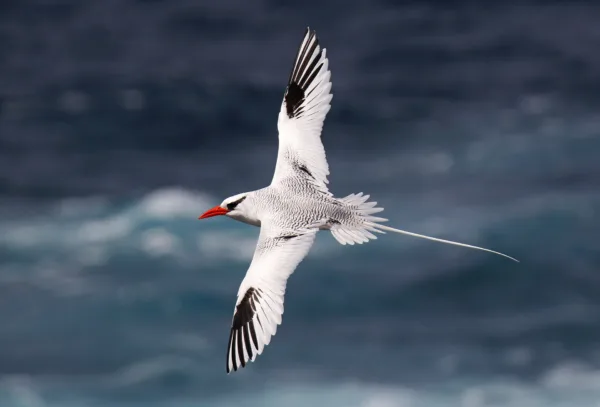
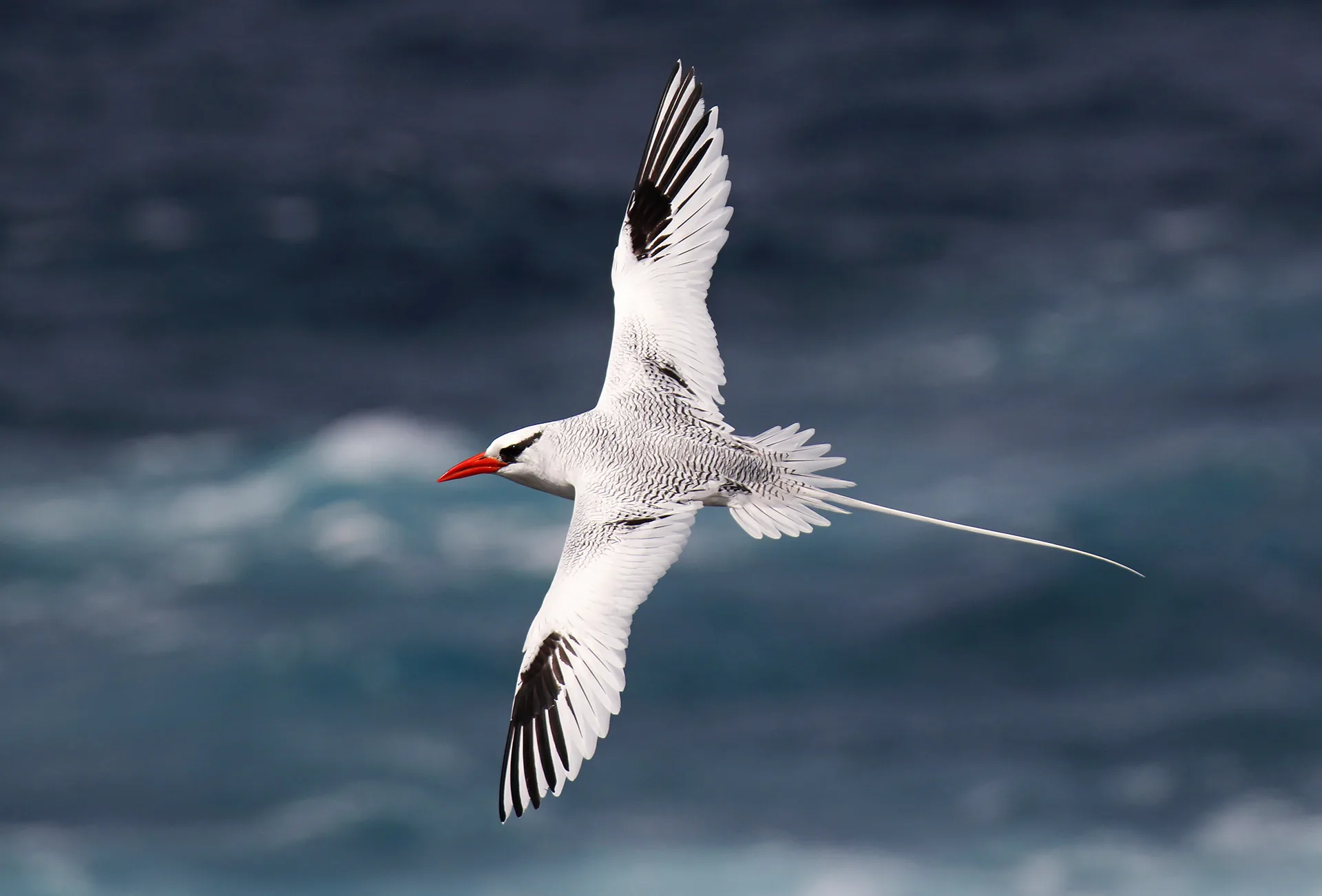
One of Sal’s most iconic birds is the Red-billed Tropicbird. Snow-white with long streaming tail feathers and a coral-red bill, these birds nest in crevices on the coastal cliffs and rocky offshore stacks. Tropicbirds are faithful to their breeding sites and mates year after year, which unfortunately makes them vulnerable – if disturbed or if predators (like rats or cats) invade, they have few alternative sites. Thankfully, Sal has remained a relatively safe haven for them. In 2018, researchers discovered that Sal Island is likely the most crucial breeding site for Red-billed Tropicbirds in West Africa. Seeing a tropicbird on Sal is a treat: they often fly solo, gliding over the waves before darting back to a cliff ledge. The area of Rabo de Junco, a promontory overlooking Murdeira Bay, is named after them and is protected as a natural reserve. Standing there, you might spot their graceful silhouettes against the blue sky or hear their harsh, shrill calls as pairs reunite at their nests.
Several shearwater species also make their homes on Sal. The Cape Verde Shearwater (Calonectris edwardsii, locally cagarra) is an endemic seabird that nests in burrows and rocky holes on undisturbed coastal slopes. At night during breeding season (summer months), their haunting calls can be heard as they return from feeding at sea. Smaller relatives, such as the Cabo Verde Little Shearwater and Storm-Petrel (locally known as pedreiro and pedreirinho), also nest in crevices, often digging small burrows or using natural cavities. These birds spend the day far out at sea and only return to land under the cover of darkness – meaning casual visitors rarely see them, but their presence is vital as indicators of ocean health.
For bird enthusiasts, Sal’s coastal nature is quietly rewarding. The island has no forests or rivers, so terrestrial bird life is sparse – but along the shores you’ll find herons stalking salt ponds, sandpipers and plovers migrating through, and even flamingos occasionally feeding in the Pedra de Lume salt lake. One truly unique bird is the Iago Sparrow (Passer iagoensis), a little brown sparrow endemic to the Cape Verdes that cheerfully inhabits towns and deserts alike (an island version of the house sparrow). But it’s the seabirds that steal the show in terms of conservation importance. Local NGOs, such as Project Biodiversity, monitor these colonies to track populations and threats. With development and tourism growing, protecting seabird nesting sites from disturbance is key. Visitors are advised to keep a distance from signed nesting areas and avoid shining lights or making noise near colonies, especially during breeding season. For example, hikers at Serra Negra or the cliffs of Monte Leão (Rabo de Junco) are cautioned not to approach if ospreys or tropicbirds are seen circling overhead, as too much disturbance might cause nest abandonment.
Sal’s seabird cliffs may lack the spectacle of, say, millions of birds on a sheer rock face (like some famed bird cliffs in other countries), but they are no less special. In the quiet dawn, seeing a tropicbird glide to its hidden nest or an osprey dive for a fish in a turquoise bay is an unforgettable experience. These birds link Sal to the vast ocean around it – they spend most of their lives at sea, only coming to land to reproduce. By guarding their few land refuges, Cape Verde is helping sustain marine ecosystems that reach far beyond its shores. The guano (droppings) from Sal’s seabirds even fertilises the island’s coastal soils and nearby plankton communities with nutrients, subtly enriching the cycle of life on this otherwise nutrient-poor island. In short, Sal’s wild cliffs and islets are lifelines for creatures that are truly citizens of the sea and sky.
Coral Reefs and Vibrant Marine Life
Surrounding Sal Island is a marine realm as fascinating as the land’s landscapes. The waters here straddle tropical and temperate zones, creating a hotspot of marine biodiversity. In fact, Cape Verde as a whole is recognised as one of the world’s top ten coral reef biodiversity hotspots. While Sal’s reefs aren’t the giant rainbows of coral one might see in the Indo-Pacific, they harbour an impressive variety of corals, fish, and other sea creatures adapted to the eastern Atlantic.
Snorkel or dive off Sal’s coast and you’ll encounter a kaleidoscope of undersea life. Dozens of species of reef fish dart among the rocks and coral heads – from parrotfish crunching algae off the reef, to butterflyfish and angelfish flitting in pairs, to schools of tiny blue and yellow chromis hovering in the water column. Octopuses hide in crevices, changing colour to match mottled rocks. Moray eels peer out with toothy grins. Here and there, vivid corals and sponges cling to submerged ledges: brain corals, fan-shaped gorgonians, and encrusting orange sponges, among others. Cape Verde’s corals are hardy; they live in warmer, more variable waters than those of many other reef systems, which could be a blessing in the face of global warming. Scientists have even sunk old ships off Sal to create artificial reefs, which quickly become colonised by corals and swarming with fish, enhancing the island’s dive sites (one such artificial reef near Santa Maria is now among the most biodiverse spots in Cape Verde).
One of the best places to witness marine life is the Baía da Murdeira, a bay on Sal’s west coast designated as a marine reserve. Its sheltered waters host coral patches and seagrass beds where fish spawn. Murdeira is also a playground for green sea turtle juveniles that forage on seagrass and an occasional stopover for dolphins. Santa Maria’s reefs in the south are similarly rich and easily accessible – it’s common to see curious sea turtles or rays gliding by when you’re diving or even just swimming in these clear waters. Locals often remark that while Sal’s on-land scenery is mostly tans and blues, underwater it explodes with every colour.
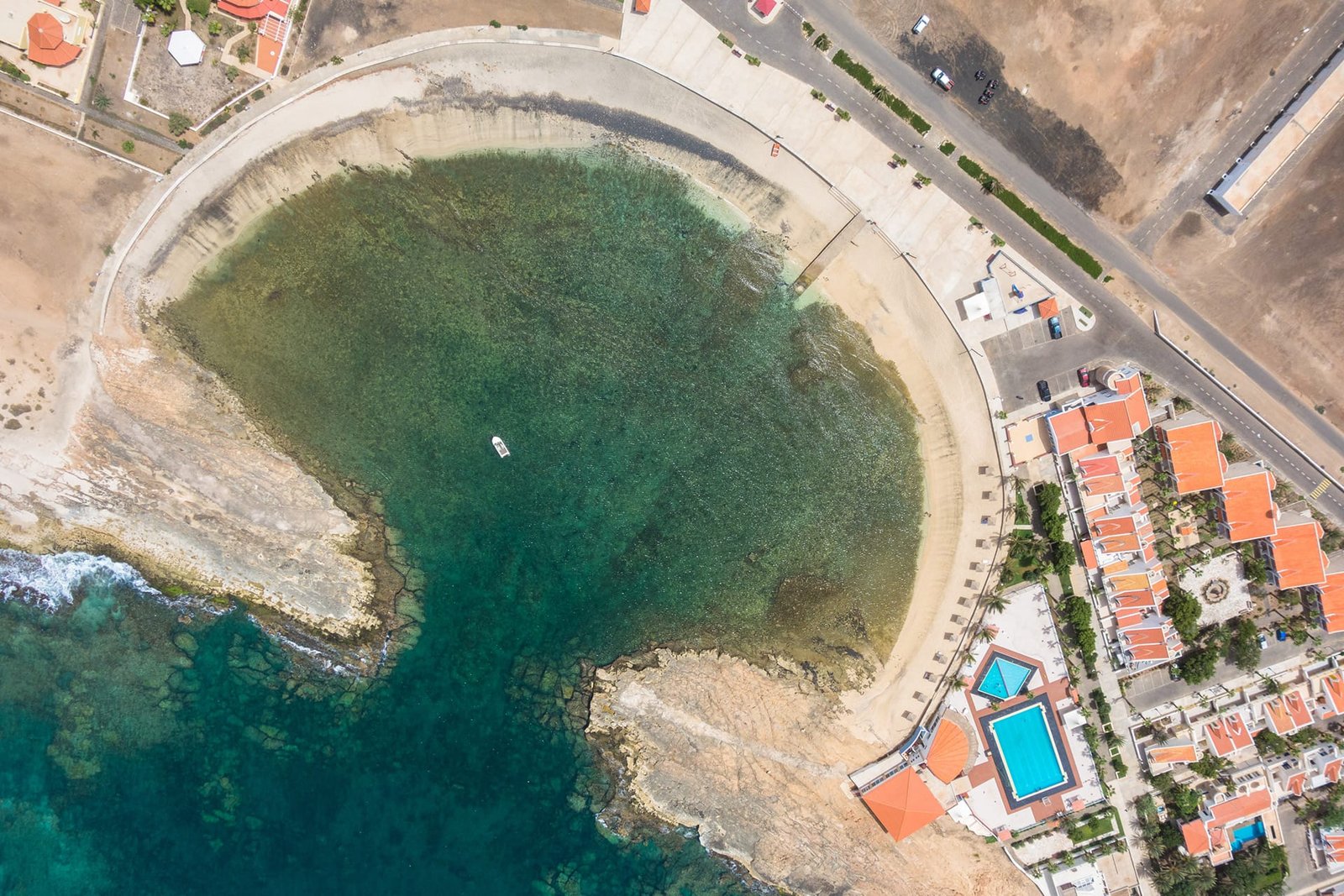
Importantly, Cape Verde’s seas are not just about small reef dwellers – big marine visitors roam here too. The archipelago lies along migratory routes for around 20 species of whales and dolphins. Humpback whales, for example, come to the warm waters around Sal and Boa Vista between February and May to breed and give birth. Lucky boat-goers might witness a 40-ton humpback breaching or mothers with newborn calves logging at the surface. Dolphins (like bottlenose, spinner, and Atlantic spotted dolphins) are frequently seen bow-riding alongside boats year-round. And beneath the waves, graceful manta rays and even the occasional whale shark (the world’s largest fish) have been spotted by divers around Sal – rare encounters that underscore how connected Sal’s reefs are to the broader ocean.
Cape Verde has taken steps to conserve these marine riches. Several coastal and marine areas around Sal are officially protected, and there are guidelines in place for responsible diving, fishing, and whale watching. Divers and snorkelers are urged not to touch corals or marine life, to use reef-safe sunscreen, and to give animals like turtles plenty of space. Local dive operators and NGOs collaborate to monitor reef health through underwater surveys and even cutting-edge tools such as environmental DNA sampling. The emerging field of marine conservation in Sal is helping to ensure that the island’s underwater wonders remain intact for future generations. After all, the ocean is Cape Verde’s lifeblood – a source of food, culture, and economic activity – and tiny Sal is proving that even a small island can lead in protecting a big sea.
Sea Turtle Sanctuaries: Ancient Rituals on Sal’s Shores
Of all Sal Island’s natural wonders, few inspire as much awe and affection as the sea turtles. Every summer, the island’s sandy beaches become the stage for an ancient, primal ritual: female loggerhead sea turtles (Caretta caretta) crawling ashore at night to lay their eggs. Cape Verde is globally important for loggerheads – it’s the main nesting site for this species in the entire eastern Atlantic, and possibly now the largest nesting colony in the world. Sal, along with the islands of Boa Vista and Maio, hosts the bulk of these nests. In recent years, nest numbers on Sal have absolutely skyrocketed, thanks to conservation efforts. In the 2015 season, only about 10,000 nests were recorded across Cape Verde, but by 2020, over 198,000 nests were counted. Some scientists believe Cape Verde’s loggerhead population may now rival or exceed those in Florida and Oman, which traditionally were the world’s largest.
During nesting season (roughly June through October on Sal), the island’s eastern and southern beaches come alive at night with these massive reptiles. Adult female loggerheads, often weighing 100–150 kg, haul themselves out of the surf typically under the cover of darkness. If you were to follow the tracks at dawn, you’d see the story written in the sand: a wide swath leading to a disturbed area where she dug her nest, laid ~80 ping-pong-ball eggs, and then returned to the sea. Conservation patrols walk the beaches nightly to protect these mothers from poachers or disturbance and to relocate nests that might be threatened by tides or development. Thanks to a national law passed in 2018, the killing or consumption of sea turtles (once traditional for meat and believed to be aphrodisiacs) is strictly criminalised in Cape Verde. Community education campaigns have transformed locals from turtle hunters into turtle guardians – a remarkable turnaround that underpins the current baby turtle boom.
If you visit Sal in late summer, you might get the chance to witness a truly heartwarming scene: hatchlings scrambling out of the sand and heading to sea. About two months after eggs are laid, the 5-cm-long baby turtles emerge, usually at night when it’s cooler, and predators are fewer. Conservation groups often organise guided hatchling releases or excavation events, where you can watch tiny turtles (many just freed from the nest) inch their way to the ocean under the fading light. It’s a profound moment – these babies have a Herculean journey ahead of them, with countless perils. Yet, a chosen few will survive and, amazingly, navigate back to this same island decades later to nest, guided by Earth’s geomagnetic cues and ancestral memory.
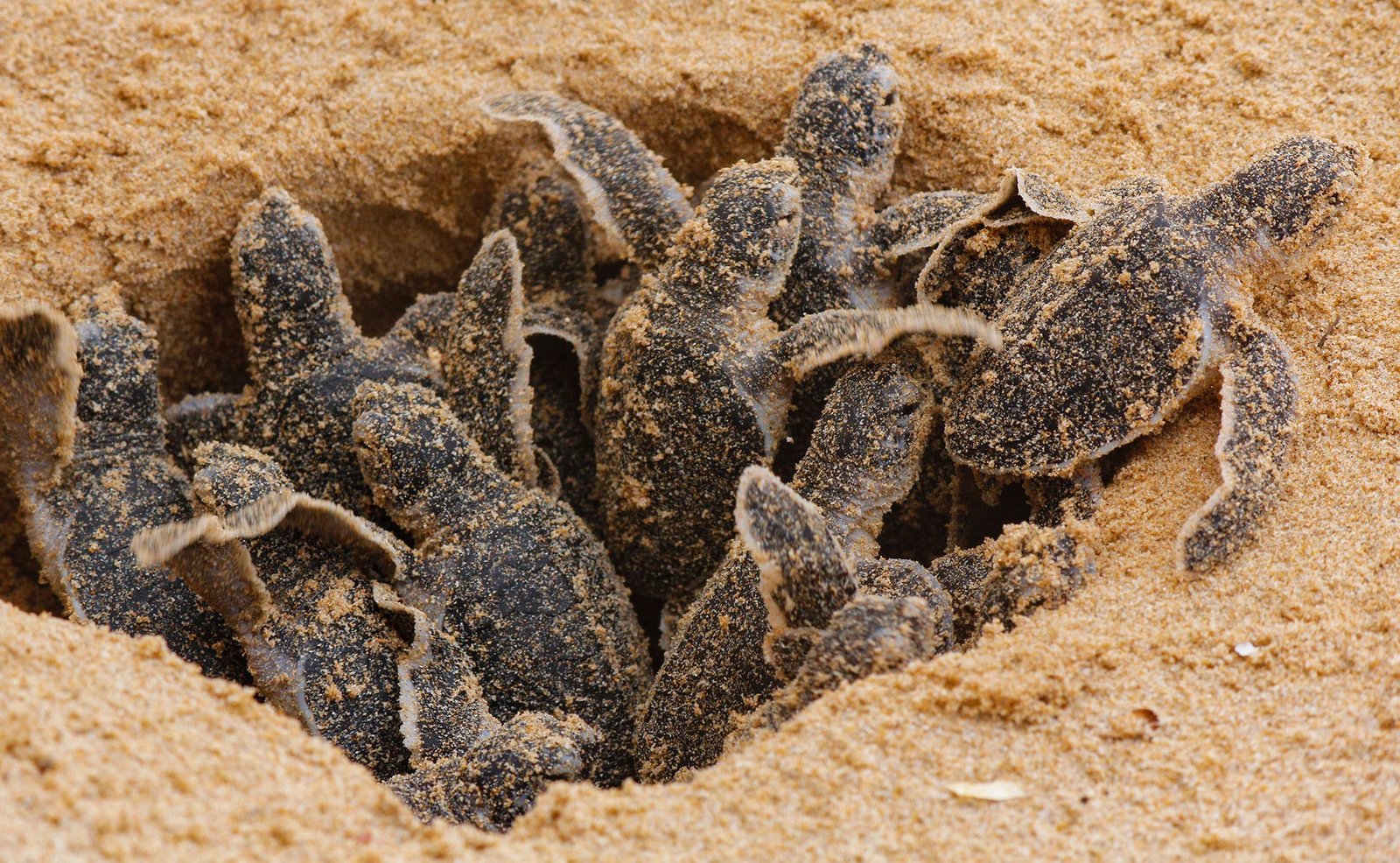
Project Biodiversity, a Sal-based NGO, reports that the number of nesting females on Sal each year now exceeds the entire loggerhead population nesting in the Mediterranean. That’s an incredible statistic that highlights Sal’s global ecological importance. Each female usually lays several clutches in a season, and then may skip a few years before returning. With tens of thousands of nests on Sal, you can imagine how many turtles are in these waters. In fact, outside nesting season, many juvenile turtles (including greens and hawksbills) forage around Sal’s reefs. Divers often encounter young green turtles nibbling algae on rocks or a curious loggerhead cruising by. These sea turtles have been roaming Earth’s oceans for over 150 million years, and to see them on Sal is to witness a living fossil carrying out its age-old life cycle.
Protecting turtles is a year-round endeavour on Sal. Volunteers and locals conduct beach patrols, manage hatcheries (to incubate eggs safely and release hatchlings), and educate tourists on turtle-friendly behaviour. For example, lights on the beach at night can disorient nesting females or hatchlings, so there are campaigns to reduce beachfront lighting during nesting months. Tourism operators are encouraged to offer “turtle watching” responsibly – by going with certified guides who ensure no one disturbs the nesting process (flashlights and cameras with flash are a big no-no, as is getting too close). These measures are paying off hugely, as evidenced by the exponential growth in nests. It’s a rare conservation success story: Sal’s turtles are rebounding. Still, challenges remain – climate change may skew hatchling sex ratios (since nest temperature determines sex, hotter sand produces more females), and continued vigilance against poaching or habitat loss is needed. But for now, every sunset that brings a crawling mother turtle onto a Sal beach, and every sunrise that sees her tracks returning to sea, is a victory for conservation.
Shark Nursery in the Shallows
If the idea of wading among sharks sounds like a fantasy, Sal Island offers just that – in a remarkably safe and educational way. On Sal’s northeast coast lies Shark Bay (Baía da Parda), a shallow inlet protected by a coral reef. Here, in knee-to-waist-deep water, juvenile lemon sharks glide gracefully around visitors’ legs – an experience equal parts adrenaline rush and ecological lesson. Shark Bay is essentially a nursery: a sheltered environment where baby and adolescent sharks gather for food and protection. The lemon shark (Negaprion brevirostris) is the star of the show, and Sal’s Shark Bay is a known nursery for this species.
On a typical excursion, you’ll don water shoes (to protect from rocks and urchins) and shuffle into the warm, translucent water with a guide. Soon, dark fins appear, slicing the surface – young lemon sharks, usually around 50–100 cm long, curious but cautious. They circle around, sometimes coming within a couple of meters of onlookers, then dart off. Lemon sharks have a yellowish-brown colouration that camouflages with the sandy bottom (hence their name), and seeing them in such clear, shallow water is thrilling. But rest assured, lemon sharks are not considered dangerous to humans. They have no interest in people; these pups are here to munch on small fish and crabs among the rocks. In fact, there have been no recorded shark bites in Shark Bay. The bigger threat is to them – from us. Guides make sure visitors don’t try to touch or scare the sharks, and feeding them is strictly prohibited (feeding can alter their natural behaviour and diet).
Shark Bay’s importance goes beyond giving tourists a neat encounter. It is a critical habitat that allows young sharks to grow away from the larger predators of the open ocean. The reef keeps out big fish (including larger sharks), so lemon shark pups can spend their early years in relative safety, learning to hunt the plentiful small prey in the bay. Over 60 species of sharks and rays are found in Cape Verde’s waters – from harmless nurse sharks to elusive hammerheads and even the occasional tiger shark. Many of these are migratory, but lemon sharks are year-round residents that use coastal shallows like Sal’s as nurseries. Scientists and conservationists have been tagging and monitoring Shark Bay juveniles for years, gathering data to demonstrate their nursery role and to push for official protection. Their research recently helped establish a new protected status for this area, recognising it as vital for the lemon shark’s life cycle.
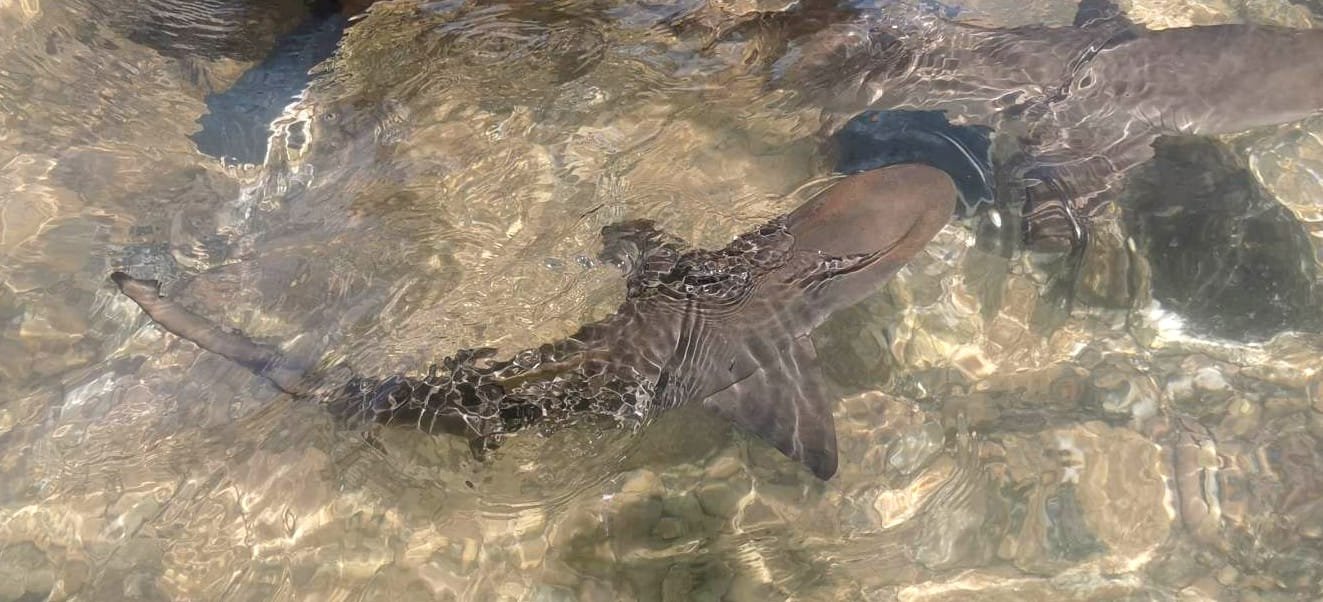
Visitors to Shark Bay essentially become citizen observers of marine ecology. Watching a baby shark weave around your group, you gain a new appreciation for these often-misunderstood creatures. Far from being mindless predators, lemon sharks are relatively social, curious, and even playful, and exhibit complex behaviours (studies show they can learn from each other and form groups based on size/age). The Shark Bay experience dispels the Jaws-fueled fear and replaces it with wonder. Many leave with a desire to protect sharks rather than avoid them. It’s especially heartening to see local Cabo Verdean guides passionately explaining shark biology and conservation to visitors, turning a casual tour into a chance to shift attitudes.
By safeguarding Shark Bay’s nursery, Sal is contributing to shark conservation in the Atlantic. Sharks worldwide are under threat from overfishing (like finning) and habitat loss. Cape Verde has become a beacon by showing that sharks are worth more alive – drawing tourists and maintaining healthy oceans – than dead. The lemon sharks of Sal, now listed as Near Threatened on the IUCN Red List due to human pressures, have a fighting chance here. The bay, the reef, and the local community all combine to give these “toothy toddlers” a safe start in life. And for us, walking among them in the wild is an unforgettable reminder that the ocean’s fiercest creatures begin as fragile babies, deserving of our respect and protection.
Mirages and Hidden Waters: Sal’s Quirky Climate
No overview of Sal’s natural wonders would be complete without mentioning its mirage-filled desert and the paradox of water on an island named “Salt”. Venture to Terra Boa, a flat expanse in northern Sal, on a scorching midday, and you may rub your eyes in disbelief – the empty desert plain ahead shimmers as if a lake had appeared out of nowhere. This is Sal’s famous mirage, an optical phenomenon that has tricked many a traveller’s eye. It occurs when layers of hot air near the ground refract sunlight from the sky, creating the illusion of water in the distance. In local Creole, some call it “lagoa miragem” – the mirage lake. As you drive or walk closer, the “water” perpetually recedes or vanishes. It’s an eerie, beautiful sight: the ground reflecting a patch of sky that looks like a tranquil blue pool, often flickering and dancing at the edges. Of course, there is no actual water there – just superheated air bending light – but one can imagine how earlier generations, crossing Sal’s deserts by foot or donkey, might have chased these phantom oases in hope of relief.
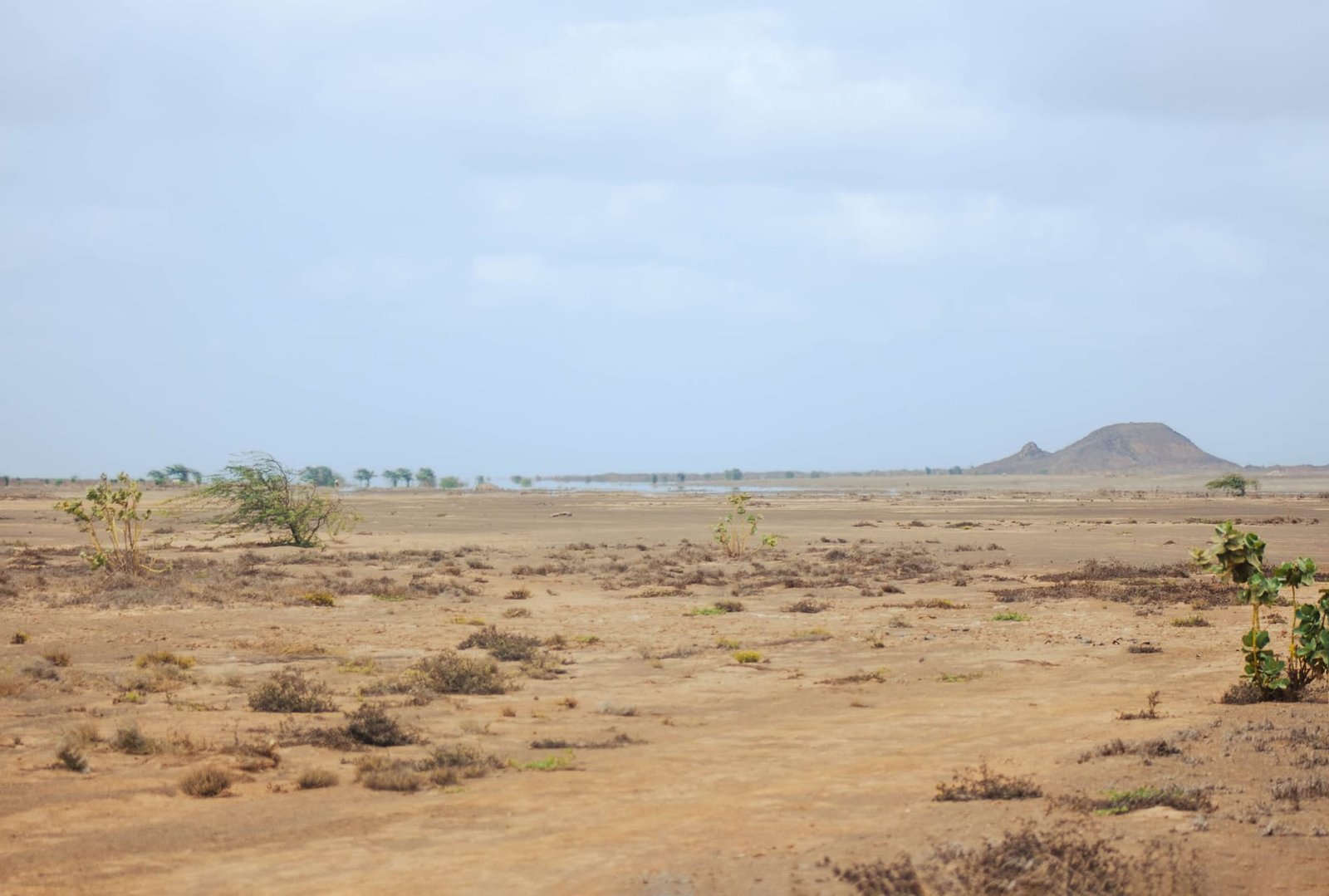
Meanwhile, real water on Sal is scarce and precious. There are no permanent streams or rivers. What little freshwater exists is underground, in aquifers and brackish water lenses that float above the heavier seawater intruding into the porous ground. Dig a well anywhere on Sal, and you’ll likely hit water a few meters down – but it will be salty or brackish. Historically, inhabitants collected rainwater in cisterns and dug shallow wells, but the supply was always limited. Today, most of Sal’s drinking water is produced by desalinating seawater, a modern fix to an ancient problem. The island’s aquifers are fragile; overuse can lead to seawater intrusion, and any pollution could linger due to slow recharge (remember, rainfall is minimal). On the bright side, Sal doesn’t have intensive agriculture or large industry, so groundwater quality issues are not as severe as in some places – it’s just the natural salinity that is a challenge.
Interestingly, Sal’s salt lakes and pools themselves hint at the island’s hidden hydrology. Pedra de Lume’s crater lake is fed by the ocean through rock fissures, demonstrating how connected the island is to the surrounding sea. Another area, the Salinas of Santa Maria (north of the town), is a low-lying salt marsh that occasionally floods with seawater and rain, leaving salt deposits as it dries. These saline wetlands can attract migratory birds such as stilts and plovers when briefly flooded. They also show how even in a desert, water finds a way – albeit mostly saltwater in Sal’s case. Beneath Sal’s surface, a faint freshwater layer does exist from the sparse rains. Certain hardy plants tap into it, and earlier inhabitants dug poços (wells) to extract somewhat fresh water for small-scale farming of dates, melons, or beans in favourable years. One can say Sal’s ecosystem has always lived on the edge of dehydration, with just enough moisture eked out from the air and earth to sustain life.
The combination of mirages by day and dew by night gives Sal’s desert a mystical quality. In the mornings, you might see a light coating of dew on surfaces – in the absence of rain, even dew becomes a vital water source for insects and birds. Some desert plants have adapted to maximise dew capture with tiny hairs or grooves on their leaves. This dew often evaporates with the first sunrays, which later create the mirages. It’s as if the island plays optical tricks but then quietly waters its hardy flora each night.
For travellers, Terra Boa’s mirage is a gentle reminder of nature’s illusions – a phenomenon that has dazzled people in deserts worldwide. On Sal, local guides sometimes joke, “We’ll take you to see our famous lake – but you can’t swim in it!” Standing there, surrounded by emptiness, watching a fake lake quiver under a blazing sun, you gain a new appreciation for Sal’s austere beauty. It’s a landscape of minimalism: sand, stone, salt – and light, bending and shimmering. It shows that even “nothingness” can be a wonder of nature.
Resilience and Conservation: Safeguarding Sal’s Natural Heritage
Sal Island’s ecology is a story of resilience – life hanging on in a place that, on paper, looks inhospitable. Over the centuries, human activity (from salt mining to fishing, and now to mass tourism) has put pressure on that fragile natural balance. Yet there is growing recognition, both locally and globally, that Sal’s natural wonders are worth protecting not just for their beauty but also for their scientific and ecological value. The island may be small, but it plays an outsized role in regional biodiversity: it’s a crucial nesting site for loggerhead turtles, a key rookery for tropical seabirds, a nursery for sharks, and home to plants found nowhere else on Earth.
Cape Verde’s government has established a network of protected areas on Sal – 11 zones in total, covering coastal, marine, and inland sites. These include:
- Salinas of Pedra de Lume and Cagarral (protected landscape),
- Monte Grande (protected landscape),
- Rabo de Junco (natural reserve),
- Baía da Murdeira (marine reserve),
- Costa da Fragata (natural reserve),
- Serra Negra (natural reserve),
- Buracona–Ragona (protected landscape),
- Salinas de Santa Maria (protected landscape),
- and several Natural Monuments such as Morrinho do Açúcar and Morrinho do Filho.
In practical terms, these designations aim to manage development and preserve the character of these environments. For instance, building is restricted in turtle nesting beaches; diving and fishing might be regulated in marine reserves; off-road driving might be curtailed in desert areas to protect vegetation and dunes. While enforcement can be a challenge (signage and awareness are still being improved), the conservation framework is at least in place.
Local and international NGOs have been pivotal in Sal’s conservation success stories. Project Biodiversity, already mentioned for turtles and birds, also leads habitat restoration – planting native dune vegetation to combat erosion and creating community programs for sustainable fishing. Another example is the SOS Tartarugas group, which began over a decade ago to protect turtles and involved many residents in night patrols and education; their efforts helped shift public sentiment and dramatically reduce poaching. Even the tourism sector is joining in: many resorts sponsor conservation activities or educate their guests (you’ll find informational boards about turtles in hotels, and some hotels dim their lights on nesting beaches). Dive operators follow codes of conduct for interacting with marine life. There’s a sense that Sal’s economy now recognises its ecology as a treasure – the natural wonders are the golden goose that needs to be kept healthy.
Resilience is also evident in the natural systems themselves. Consider how Sal’s beaches rebounded when given a break from hunting – turtle nests multiplied in just a few years, revealing the turtles’ resilience when humans stand down. Or how the depleted fish around Santa Maria reefs returned after an artificial reef and marine protection gave them refuge. Or how a once-hunted species like the osprey is slowly recovering now that it’s protected and people are aware (spotting an osprey diving for fish is becoming more common around Sal’s bays). Nature has a way of healing when afforded the chance. The key is to ensure human activities remain in balance with conservation. This means continuing to enforce laws against illegal fishing, preventing sand mining (which has, in the past, damaged beaches and turtle habitat), managing freshwater use sustainably, and planning coastal development smartly.
Climate change poses a looming challenge to Sal’s resilience. Rising sea levels could threaten low-lying areas like Pedra de Lume’s crater (imagine the sea breaching fully – it would change the salina ecosystem). Hotter temperatures could further stress plants and alter the marine environment (e.g., coral bleaching, skewed turtle sex ratios). Stronger, erratic weather events might increase erosion or inundation. That’s why conservation here also means studying and monitoring – the more we know, the better we can help ecosystems adapt. Sal’s scientists and volunteers tag turtles, monitor bird nests, measure coral growth, and track climate data, contributing to global research on how arid-island ecosystems cope with change.
In the end, what makes Sal truly special is the way natural wonder and human wonder come together. A visitor might come for the beaches and sunshine, but leave with memories of floating in a volcano crater, or watching a baby turtle crawl to the sea, or seeing a mirage melt into thin air. These are experiences that inspire and educate. Sal’s mystical appeal – the mirage, the Blue Eye, the stark desert-meets-ocean vibe – is deeply tied to its scientific significance. Each feature we’ve explored is not just a pretty scene but a chapter in Earth’s story: volcanic birth, life’s tenacity, adaptation, migration, and renewal.
As the most accessible island of Cape Verde, Sal has a responsibility to lead by example in conservation, and it appears to be embracing that role. The ecological resilience of Sal – its ability to sustain life in extremity – is something worth celebrating and defending. In protecting Sal’s natural wonders, Cape Verde is safeguarding not only its heritage and a boon to sustainable tourism, but also a critical piece of the Atlantic’s ecological puzzle. The efforts today ensure that future generations will continue to be amazed by Sal’s salt lakes and sand dunes, its turtles and sharks, its palms and tropicbirds, just as we are now.
Bibliography & Sources:
- Vulnerability of loggerhead turtle nesting sites in Cabo Verde, D. Sousa-Guedes et al., 2025
- Chromosome-level genome assembly and methylome profile…loggerhead sea turtles, Yen et al., Gigascience, Volume 14, 2025,
- Boom time for Cape Verde’s sea turtles as conservation pays off, A. Hammerschlag, The Guardian, 2021;
- Conservation importance of loggerhead turtle trends in Cape Verde, Cambridge University Press, 2018;
- The effects of tourism, beachfront development and increased light pollution on nesting Loggerhead turtles Caretta caretta (Linnaeus, 1758) on Sal, Cape Verde Islands, Harriette Taylor, Jacquie Cozens, Zoologia Caboverdiana 1 (2): 100-111, Sociedade Caboverdiana de Zoologia, ISSN 2074-5737;
- The international importance of the archipelago of Cape Verde for marine turtles, in particular the loggerhead turtle Caretta caretta, Adolfo Marco et al., Zoologia Caboverdiana 2 (1): 1-11, Sociedade Caboverdiana de Zoologia, 2011, ISSN 2074-5737;
- Evaluating loggerhead sea turtle (Caretta caretta) bycatch in the small-scale fisheries of Cabo Verde, S. Martins et al., Reviews in Fish Biology and Fisheries Volume 32, pages 1001–1015, 2022;
- Marine Biodiversity around Cape Verde, GEOMAR / UniCV;
- New Insights to Marine Biodiversity Around the Cape Verde Islands, ECO Magazine, 2025;
- Birds of Sal (Seabird Conservation), Project Biodiversity, 2018;
- Top Things to Do in Sal (Conscious Tourism Guide), Project Biodiversity, 2023;
- Sea Turtles of Cabo Verde, Project Biodiversity, 2025;
- Wildlife of Cape Verde, Wikipedia, the Free Encyclopedia, 2023;
- Pedra de Lume Salt Mines, UNESCO World Heritage Convention;