Related Posts
Red-billed Tropicbird, or Rabo-de-junco “tail of the rush”
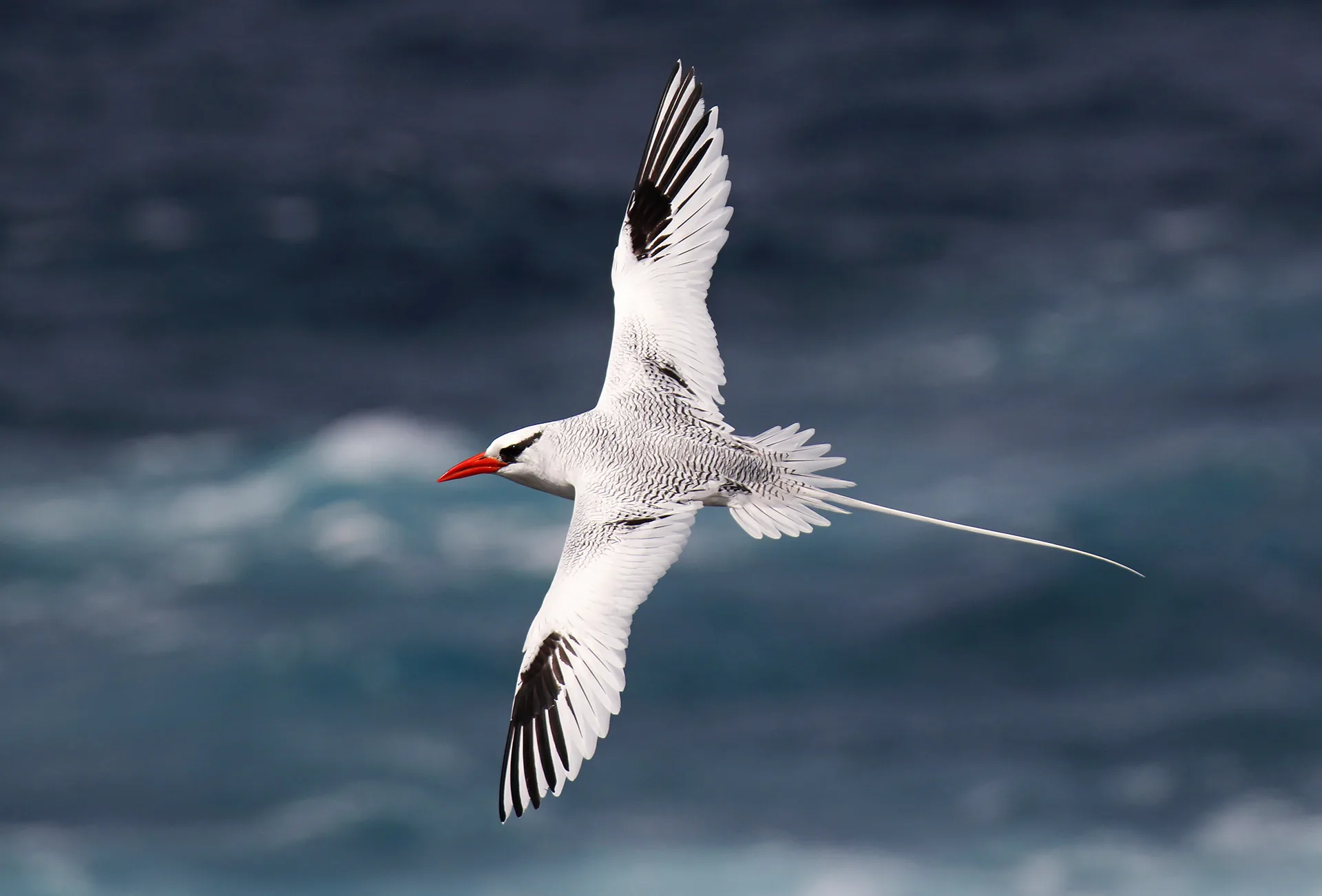
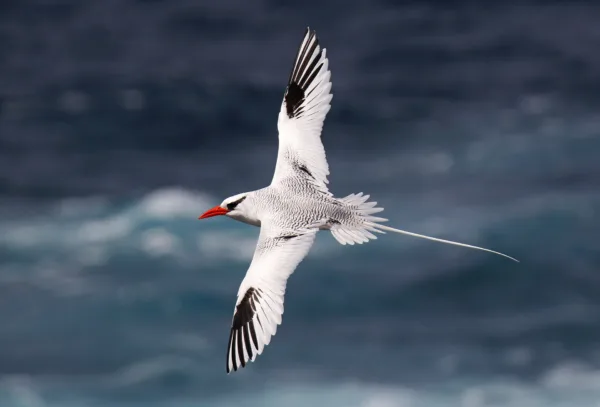
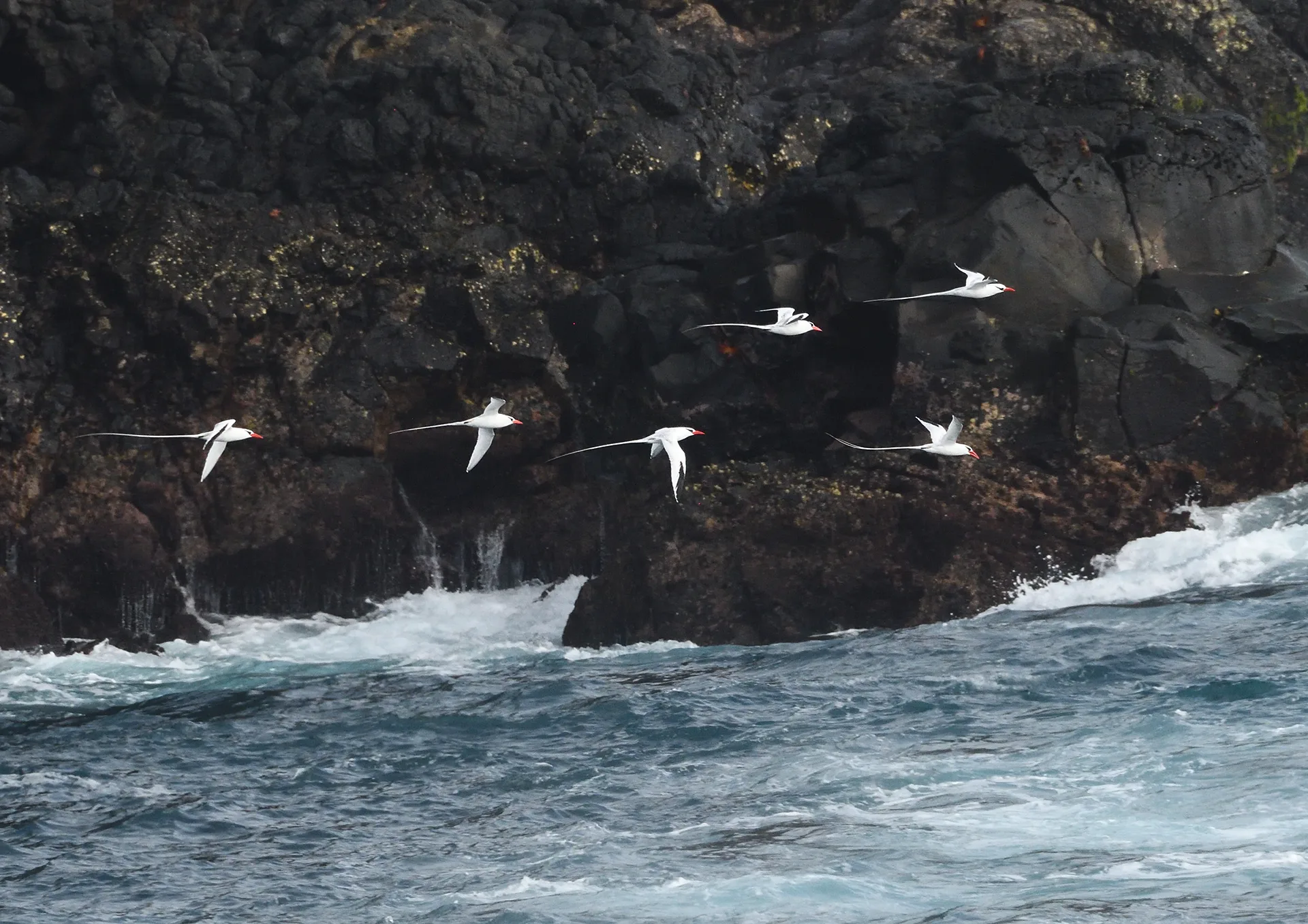
A Red-billed Tropicbird (Phaethon aethereus) soars above the Atlantic waves. These graceful “sea swallows” spend most of their lives roaming the open ocean, only coming ashore to breed on remote islands.
Few sights are as striking along Cape Verde’s coast as the Red-billed Tropicbird gliding on the trade winds, its snow-white plumage and twin tail streamers trailing behind. Locally called rabo-de-junco (“tail of the rush”), this elegant seabird is an iconic but elusive resident of the archipelago. Tropicbirds range across the tropical Atlantic, Pacific, and Indian Oceans, living almost entirely at sea and touching land only to nest. On Sal Island, Cape Verde, newly discovered colonies of Red-billed Tropicbirds have revealed a thriving seabird haven and an unprecedented opportunity for scientists to study and protect this species.
An Iconic Seabird of Tropical Oceans
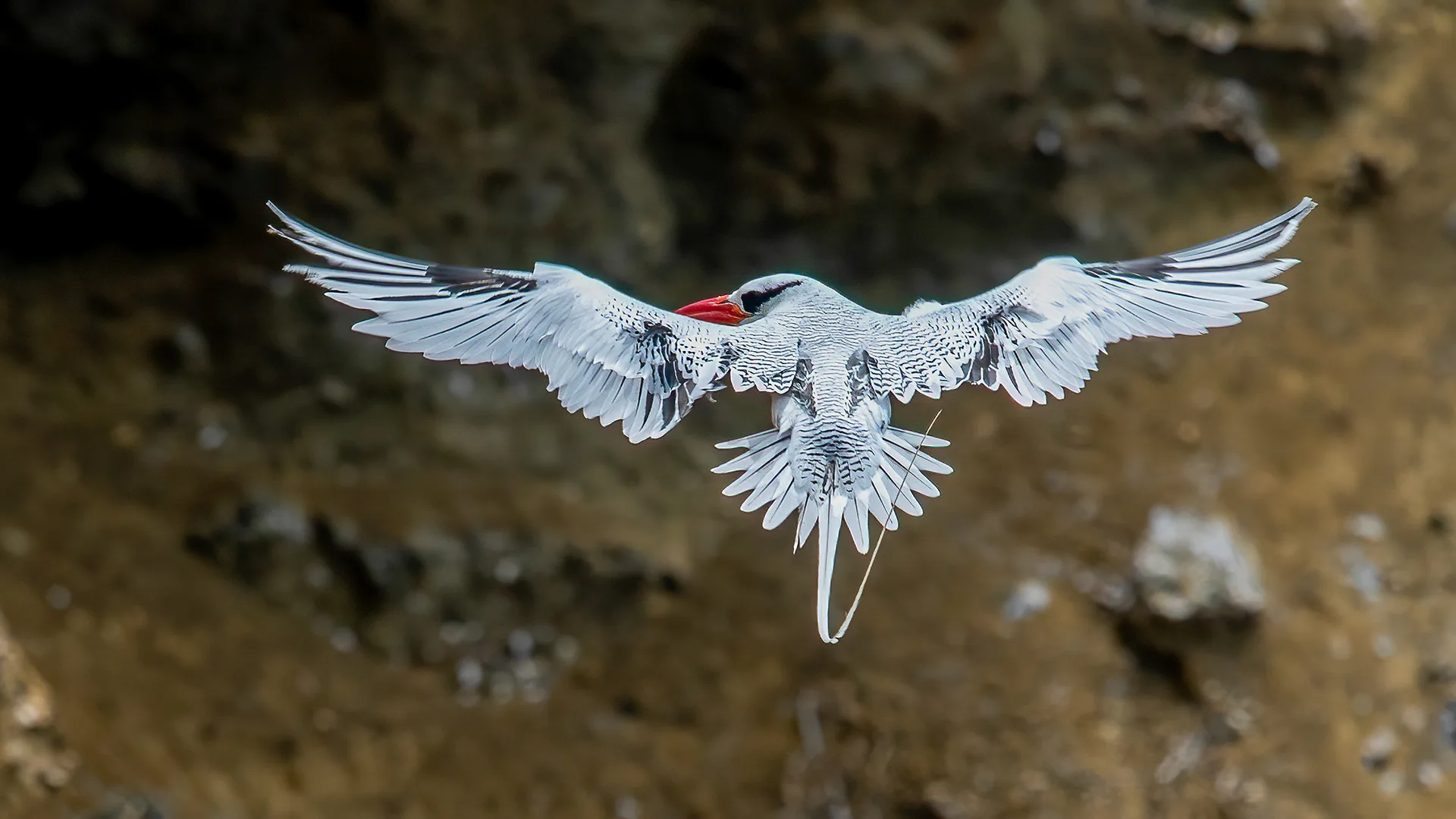
Red-billed Tropicbirds are uniquely adapted to a life wandering over the ocean expanses. About the size of a gull with a wingspan of around 1 meter, they are primarily white with fine black barring on the back and black wingtips. As their name implies, they sport a vivid red bill and extremely elongated tail feathers – two ribbon-like streamers that can double the bird’s length. In flight, they have a direct, swift glide, sometimes resembling giant terns. Seabird enthusiasts marvel at their aerial agility, describing how tropicbirds “surf” the stormy wind with ease. At sea, they are superb flyers capable of covering vast distances with efficient wingbeats and glides. Observers have clocked them cruising at ~44 km/h and effortlessly lifting off the water if they need to rest afloat.
Picture: Range map of Red-billed Tropicbird (Phaethon aethereus). Colour: ■ = Nonbreeding, ■ = Breeding; via Wikimedia Commons.
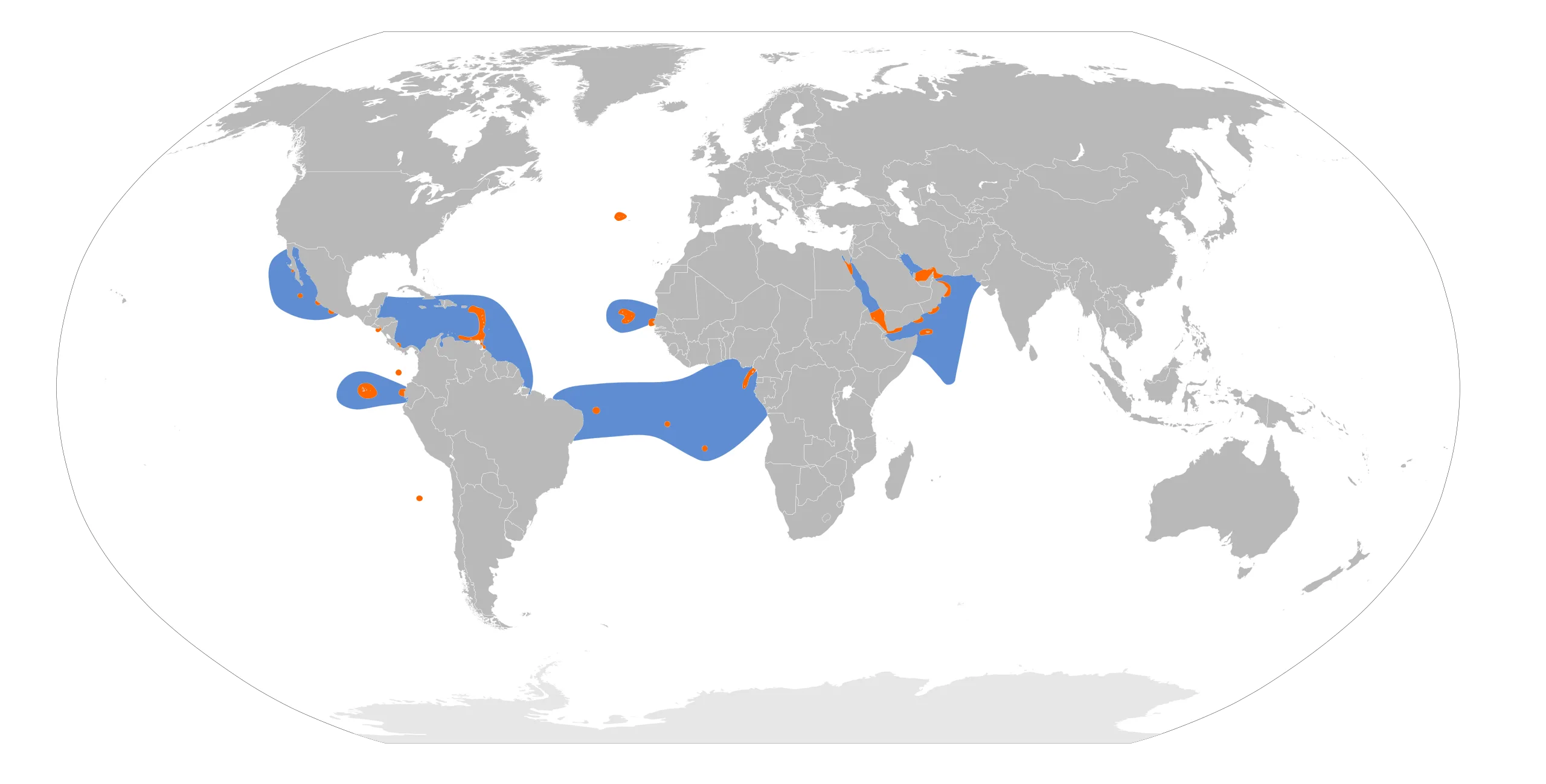
Despite their wide oceanic range, Red-billed Tropicbirds are among the least known tropicbird species. Globally, they are found in warm waters of:
- the Atlantic (including the Caribbean and Cape Verde region),
- the East Pacific (e.g. around Mexico and the Galápagos),
- the northern Indian Ocean.
Cape Verde hosts the only breeding populations in the Eastern Atlantic (Western Palaearctic), aside from a tiny colony off Senegal. This makes the archipelago a critical stronghold for the species in West Africa. In fact, tropicbirds were historically so scarce in this region that early estimates around 2000 tallied fewer than 150 breeding pairs in all of Cape Verde. That picture has changed dramatically with recent discoveries on Sal Island. The newly established colonies on Sal represent one of the largest concentrations of Red-billed Tropicbirds in the Atlantic, underscoring the island’s importance to the species.
Life on Sal’s Cliffs: Breeding Habits and Behaviour
Red-billed Tropicbirds lead mostly solitary lives at sea, but come breeding time, they gather in loose colonies on isolated islands and coastal cliffs. They are long-lived birds (some seabird relatives survive for over 40–50 years) and exhibit a slow reproductive strategy: pairs typically mate for life and raise only one chick per year. On Sal Island, tropicbirds nest in hidden nooks ranging from rugged seaside cliffs to small offshore islets and even an inland slope far from the coast. Each nest is a simple scrape or bare chamber under rocks, in crevices, or on ledges – there is no elaborate nest structure. The female lays a single egg, and both parents share the incubation duties over roughly six weeks. Tropicbirds usually breed on a non-strict schedule in tropical environments; on Cape Verde, they can be found nesting in most months, though studies indicate a peak egg-laying period in late autumn and early winter (roughly October–January) and a peak of chicks in nests by February–March.
Inside their cliff burrows or rocky recesses, tropicbird chicks hatch blanketed in grey down and sporting a yellow bill (in contrast to the adult’s red bill). The chick remains in the nest for about 2–3 months, dutifully cared for by its parents. Tropicbird parents alternate flights to sea to bring back meals of regurgitated fish and squid for their growing chick. By 40–50 days old, the downy chick begins shedding its fuzzy coat as juvenile feathers emerge. Young tropicbirds lack the streaming tail plumes of adults and show more black barring on their upperparts. Eventually, at around 12–13 weeks old, the well-fed juvenile will make its first clumsy leap into the air, fledging out to sea. Remarkably, the fledgling receives no further parental care after leaving the nest – it must immediately fend for itself on the ocean, not touching land again until it is mature enough to breed a few years later.
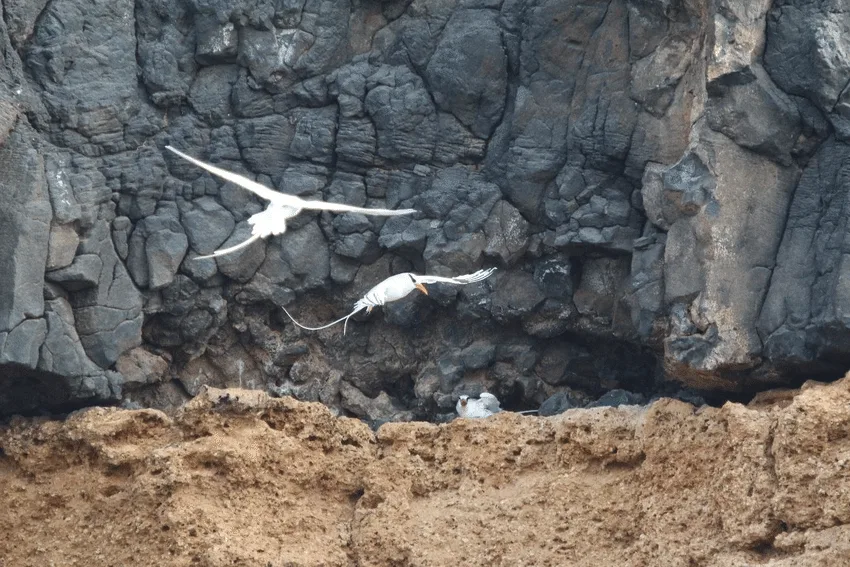
During the breeding season on Sal, observers often note small groups of tropicbirds engaging in aerial courtship displays. Mates perform synchronised flight manoeuvres, circling above the colony and emitting their harsh, trilling calls – described as a loud “kreeeee-kreeeee-kri-kri-kri” scream. Apart from these breeding serenades, tropicbirds are usually silent at sea. They are also rather clumsy on land – with legs placed far back on the body, they cannot walk well and prefer shuffling to and from the nest. For takeoff, they rely on gravity or a downhill runway to get airborne. This is one reason they favour high, windswept cliff sites or flat islets with unobstructed surrounds. Sal Island’s geography provides ideal breeding habitats in that regard: the steep seaside escarpments and predator-free islets (like Ilhéu Rabo-de-Junco, named after the bird itself) offer safe nesting for hundreds of pairs. Until just a few years ago, virtually nothing was documented about Sal’s seabird colonies, but systematic surveys since 2017 have now identified multiple tropicbird nesting sites across the island.
Ocean Wanderers: Foraging and Migration
When not tied to a nest, adult Red-billed Tropicbirds are highly pelagic, roaming far and wide over the ocean in search of food. Their diet consists mainly of small fish (such as flying fish or mackerel scad) and squid captured near the surface. Tropicbirds are adept divers – they hunt by plunge-diving from the air, folding back their wings to torpedo into baitfish schools spotted from above. Often, they hover briefly, then drop sharply, snatching prey just below the surface. Unlike some seabirds, tropicbirds typically forage alone or in pairs, rather than in large flocks, and they do not routinely follow boats. On the wing, they can cover impressive distances: tracking studies on Cape Verde’s tropicbirds have revealed foraging trips of hundreds of kilometres out into the Atlantic.
In one recent study, scientists equipped tropicbirds from Sal, Boa Vista, and Raso with GPS loggers and recorded over 500 foraging trips. The data showed that tropicbirds from Sal and Boa Vista (both eastern, relatively flat islands) often frequented similar offshore areas, with their core feeding ranges overlapping at sea. Birds from Raso (a small western islet) foraged in more distant waters – up to 720 km from the colony – and had larger, more circular foraging ranges, suggesting they needed to travel farther to find adequate prey. Interestingly, analysis of environmental conditions (like ocean fronts and eddies where nutrients concentrate) showed no strong association with where tropicbirds chose to feed. In other words, these birds did not simply hunt at obvious oceanographic hotspots, making their movements less predictable. Such findings underscore how little was previously known about tropicbirds’ at-sea behaviour and how each island’s birds may exploit the ocean differently, which is essential information for marine conservation planning.
What about the period when tropicbirds aren’t breeding – where do they go for the rest of the year?
This remains one of the big mysteries that scientists are now tackling with new technology. Because GPS devices have limited battery life (only lasting days or weeks), researchers on Sal have been deploying miniature geolocator tags on tropicbirds to track their long-term movements. Geolocators record light levels, allowing an estimate of the bird’s latitude and longitude each day. By recovering these tags after a year, the team can trace where Sal’s tropicbirds migrate during the non-breeding season.
“Indeed, we still do not know where Cape Verdean Red-billed Tropicbirds spend their non-breeding period – whether they stay near Cape Verde waters year-round or migrate somewhere else in the Atlantic,”
admits researcher Teresa Militão, BBC Earth (source). Initial results from ongoing tracking suggest that some individuals may disperse widely into the tropical Atlantic, potentially roaming toward the west African coast or even southward, while others might remain relatively near the islands. With each season’s data, scientists are piecing together a more complete annual picture – from nesting on Sal’s cliffs to wandering the open sea – which is crucial for understanding what threats the birds face throughout their life cycle.
Population Status and Sal’s Ecological Significance
For a species once thought to be only a sparse breeder in West Africa, the discovery of large tropicbird colonies on Sal Island has been a game-changer. In field surveys coordinated by the Project Biodiversity (Associação Projeto Biodiversidade) and the University of Barcelona, over 1,200 Red-billed Tropicbirds (adults and chicks) were documented across three main sites on Sal. These include an offshore islet (Ilhéu Rabo-de-Junco), a steep coastal cliff, and an inland slope – each hosting dozens or hundreds of nests. This makes Sal one of the most important breeding sites for tropicbirds in all of West Africa. In fact, biologists note that the colony on Sal’s Rabo-de-Junco islet is likely the largest known Red-billed Tropicbird colony in the eastern Atlantic region, rivalling or exceeding those on other Cape Verde islands. For perspective, prior to these surveys, major colonies in the archipelago were known on only a few islets (such as Raso and Branco) with perhaps a few hundred birds at most. Sal’s colonies thus potentially represent a substantial proportion of the entire regional population.
Zooming out to the global scale
The Red-billed Tropicbird is currently classified as Least Concern on the IUCN Red List, but with an important caveat: its populations appear to be declining across much of its range. The global population is estimated at 8,000–15,000 breeding pairs (roughly 16,000–30,000 mature individuals). Significant colonies exist in the Caribbean and the Gulf of Mexico, around islands off northern South America, and in the Indian Ocean (e.g., the Red Sea and the Arabian Gulf). There are even small but growing colonies in the Canary Islands, where tropicbirds recently colonised in the 21st century.
Against this backdrop, Cape Verde’s roughly several hundred breeding pairs (possibly more as new colonies are still being found) might seem modest. However, because seabird populations are in steep decline in many places, every secure stronghold is critical. Cape Verde’s islands remain the only breeding sites for tropicbirds in the eastern Atlantic, so their conservation value is disproportionately high. The discovery that Sal Island alone holds hundreds of tropicbirds was therefore extremely significant. It not only boosted the known population in the region, but also offered a chance to establish long-term monitoring in a relatively accessible location – something that was logistically difficult on the more remote islets used by seabirds in the past.
Cape Verde’s status further highlights Sal’s importance as a seabird hotspot within the Atlantic. The archipelago supports eight breeding seabird species (including endemics such as the Cape Verde Shearwater and Petrel), yet seabirds were poorly studied here until recently. Nationwide surveys since 2017, led by BirdLife International and partners, have identified over 30 new seabird colonies across Cabo Verde. Some of the largest colonies ever recorded for species like the Red-billed Tropicbird were among these finds, with Sal Island being a prime example. In essence, Sal has transformed our understanding of tropicbird distribution in the region. From being virtually “off the radar” ornithologically, Sal is now recognised as a key breeding site that may help ensure the species’ future in the Atlantic.
Perils at Sea and On Land: Threats to Tropicbirds
Though not currently endangered, Red-billed Tropicbirds face a growing gauntlet of threats, and their numbers are trending downward globally. As apex marine predators, they are susceptible to changes across vast areas of the ocean, and as island breeders, they are incredibly vulnerable when on land. Cape Verde’s tropicbirds, unfortunately, illustrate many of these challenges. One major threat at sea is bycatch – the accidental entanglement or hooking of birds in fishing gear. Tropicbirds often take bait or get snagged on longline fishing hooks, and an estimated 700,000 seabirds are killed annually worldwide by fisheries bycatch. Tracking studies in Cape Verde are helping pinpoint where tropicbirds forage and thus where they might interact with fishing fleets. This information can inform fisheries management to mitigate risky practices in those hotspots (for example, setting hooks at night when tropicbirds are less active).
Another pervasive threat is the collapse of fish stocks in some regions. Tropicbirds rely on healthy populations of small pelagic fish; overfishing and climate-driven ocean changes can reduce their food supply. Although Cape Verde’s surrounding waters are not heavily industrially fished compared to other areas, changes in ocean temperatures or currents (possibly linked to climate change) could affect prey availability seasonally, which in turn might impact tropicbird breeding success. Ongoing studies examining tropicbird diet via isotope analysis of blood and even oil from the birds’ preen glands aim to detect shifts in their food sources and any accumulation of pollutants.
By far the most devastating threats, however, occur at land-based nesting colonies – especially introduced predators and human disturbance. Red-billed Tropicbirds evolved on isolated islands with no mammals, so they have virtually no defences against creatures like cats, rats, or dogs. When European sailors and subsequent settlers introduced mammals to islands worldwide, tropicbirds (like many seabirds) suffered heavy losses. In Cape Verde, feral cats and rats now infest many islands, and they readily prey on tropicbird eggs, chicks, and even brooding adults. On Sal’s mainland, evidence of cat predation has been found at tropicbird nests, captured starkly by camera traps: one sequence showed a cat prowling a tropicbird burrow, after which the adult and egg disappeared. In early 2019, a grisly event occurred when a pack of wild dogs got into one of Sal’s main colonies – killing 18 adult tropicbirds and 5 chicks in under two weeks. Such losses of breeding adults are catastrophic for a species that reproduces so slowly. It can take many years for a population to recover from the death of a large number of adults, if it recovers at all.
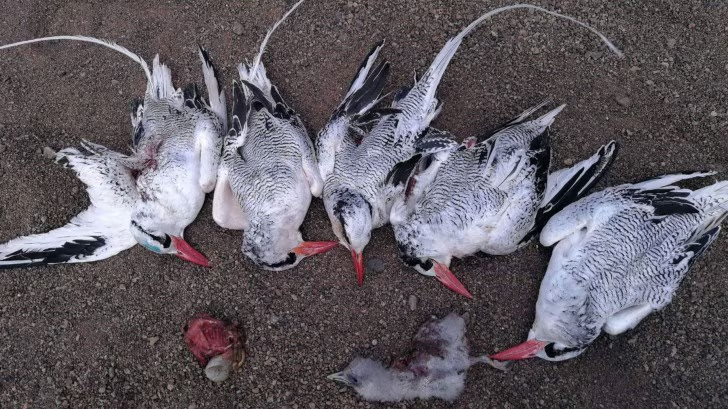
Human activities have also directly imperilled the tropicbirds. On some of the smaller Cape Verdean islets, illegal egg collection and hunting have historically been issues. Until recently, it was not thought to occur on Sal, but biologists were dismayed to discover that local people were harvesting adult tropicbirds for food on Sal and Boa Vista. In one incident in Boa Vista, eight adult tropicbirds were found killed near a monitoring site in January, apparently to be eaten. Beyond the obvious toll on the birds, such poaching can swiftly extirpate a colony if left unchecked. Even infrequent killing of a few adults a year could drive a small island population to extinction, given each adult’s high value to the breeding population.
Other threats on land include habitat disturbance and pollution. Tropicbirds nest in fragile environments – steep slopes or sandy ground – that can be trampled or eroded by goats or human visitors. Light pollution from coastal development can disorient young fledglings, and plastic litter can choke nesting sites. Invasive fire ants have even been noted as a menace, as they can swarm and kill hatchlings on some islands. All these factors contribute to what experts call an “alarming” situation for tropicbirds in West Africa if conservation actions are not taken urgently.
Science and Conservation in Action on Sal Island
The good news is that Sal Island has become a focal point for proactive seabird conservation in Cape Verde. Since 2017, Project Biodiversity – a local conservation NGO – and international partners have run the first comprehensive seabird monitoring program on Sal. This initiative is part of a larger BirdLife International effort (the Alcyon project) to protect seabirds and Important Bird Areas across West Africa. On Sal, a team of biologists and volunteers has been scaling cliffs and trekking to remote corners of the island to study and safeguard the tropicbird colonies. Their work begins with fundamental science: they systematically ring (band) every tropicbird they can catch, giving each a unique ID so individuals can be tracked over years. Ringing has enabled the team to estimate population size more accurately and to monitor adult survival rates and breeding returns. In fact, nearly 7,000 individual seabirds (of various species) have been ringed across Cape Verde as part of this program, including hundreds of tropicbirds on Sal. This yields valuable data on whether young Sal-fledged tropicbirds return to breed and how long adults live – key parameters for assessing population viability.
Equally high-tech are the tracking studies already mentioned. The Sal team, in collaboration with the University of Barcelona, has deployed over 2,000 GPS trackers and hundreds of geolocators on seabirds throughout Cape Verde, with tropicbirds a significant focus. Every tracked foraging trip or migration route adds a piece to the puzzle of how these birds use their environment. Such research directly informs conservation: for example, if GPS data show that tropicbirds frequently feed in a particular offshore area, that area can be proposed as a marine protected area or monitored for fishing impacts. The tracking data from Sal and other islands are being integrated into a national seabird database – one of the largest of such datasets in the tropics – to guide marine spatial planning and fisheries bycatch mitigation in the region.
On the ground, conservation actions are ramping up. Given the severe predation pressure, APB and partners have initiated invasive predator control at critical sites. There is an increasing effort to control feral cat and dog populations near known colonies on Sal and to keep rats off the smaller islets. In other islands (such as Fogo and Raso), community-led campaigns have successfully halted seabird poaching over the last few years. Similar awareness programs are taking place on Sal: outreach to local communities emphasises the importance of Sal’s wildlife and discourages the hunting of birds. Educational activities – from school visits to a new seabird interpretation centre – have reached thousands of Cape Verdeans, helping build local pride and stewardship for species such as the tropicbird. Notably, conservationists have engaged local fishermen and even media personalities in seabird monitoring, creating widespread public interest in protecting these birds.
The Sal project has also contributed at the policy level. Data gathered on threats were shared with Cape Verde’s government, leading to improved enforcement of protected areas and the drafting of a national policy to address invasive species.
“We identified that invasive alien species and illegal, regular landings on protected islets are the main threats… The disturbance caused has a severe impact on breeding success, and it is known that alien predators – specifically fire ants, rats, mice and even feral cats or dogs – can cause local extinctions.” (source)
Notes Pedro Geraldes of the Portuguese Society for Birds, a partner in the project. Thanks to such findings, conservation interventions are now better targeted. For instance, on Sal’s Rabo-de-Junco islet (now recognised as a vital seabird hotspot), measures are in place to prevent unauthorised landings and to maintain it as a predator-free sanctuary. Ongoing monitoring indicates these efforts are paying off, as the breeding colonies on key islets have seen no human-caused bird deaths in recent seasons.
A Beacon for Tropicbird Research and Conservation
Sal Island has rapidly emerged as a living laboratory for the Red-billed Tropicbird, offering hope and insight for the species’ future. What makes Sal special is not just the size of its tropicbird population, but its accessibility and the collaborative conservation model unfolding here. In 2017, when a few inquisitive biologists from Project Biodiversity first noticed tropicbirds frequenting Sal’s shores, they had “no idea how big the colony was” until systematic nest counts revealed the actual numbers. That realisation set in motion a cascade of actions – from scientific studies to community engagement – that have elevated Sal to the forefront of seabird conservation in West Africa. Today, Sal’s tropicbird colonies are closely watched and studied. Every breeding season yields new data on their movements, breeding success, and challenges. This continuous stream of information empowers conservationists to act swiftly, whether responding to a predator incursion or advocating for changes in fishing practices. In short, Sal has become a beacon of knowledge, shining light on the once-mysterious lives of tropicbirds.
The importance of Sal for scientific study cannot be overstated. Previously, researchers struggled to gather basic biological data on Red-billed Tropicbirds because colonies were often on remote rocks or steep uninhabited islands. Sal’s colonies, in contrast, allow regular and detailed monitoring, essentially for the first time in this region. Techniques such as motion-sensor cameras in nests, drone surveys of cliffs, and the collection of genetic samples from feathers are all being applied to Sal to learn everything from tropicbird behaviour to their genetic diversity. These efforts not only inform local conservation but also contribute to global understanding of the species. For example, findings from Sal about tropicbird foraging range and habitat use have been shared with the wider seabird research community (including at international conferences and in scientific publications) to improve conservation strategies across tropicbirds’ range. Knowledge gained on Sal may help protect tropicbirds in other parts of the world – such as identifying marine Important Bird Areas, or demonstrating the effectiveness of predator control for colony recovery (as seen on other islands like Ascension, where eradicating feral cats led to a notable tropicbird rebound).
In the grand scheme of things, Sal Island exemplifies how local action can drive global impact. By safeguarding one of the largest tropicbird colonies and deeply studying its dynamics, conservationists on Sal are ensuring that these exquisite “tail-of-the-rush” birds continue to grace Cape Verde’s skies. The work underway – from ringing chicks in cliffside crannies to lobbying for marine protected areas – is laying a foundation so that future generations of Cape Verdeans (and visiting nature-lovers) will always delight in the sight of a Red-billed Tropicbird effortlessly carving through the blue Atlantic air. Sal’s tropicbirds have become ambassadors for seabird conservation in the region: their presence is a reminder of Cape Verde’s rich natural heritage, and their survival is a measure of our commitment to preserving the wild places where land meets sea. With continued research, community involvement, and targeted protection, Sal Island is poised to remain a vital refuge for the Red-billed Tropicbird – truly a seabird haven in the tropical Atlantic.
Bibliography & Sources:
- Tracking the Tropicbirds of Sal, Project Biodiversity, 2019;
- How Cabo Verde is becoming a safe haven for seabirds, Sánchez, E. S., BirdLife International, 2020;
- Saving Red-billed Tropicbirds, Militão, T., BBC Earth, 2019;
- Tracking Red-billed Tropicbirds, Saldanha, S., BOU (British Ornithologists’ Union), 2020;
- Distribution, abundance, and on-land threats to Cabo Verde seabirds, Semedo, G., Paiva, V. H., Militão, T., et al., Bird Conservation International 30(S1): 13–28, via Cambridge University Press, 2020;
- Reproductive Success of Red-Billed Tropicbirds (Phaethon aethereus) on St. Eustatius, Caribbean Netherlands, Hannah Madden, Mardik Leopold, Frank Rivera-Milán, et al., Waterbirds, 45(1):39-50 (2022).
- Red-billed Tropicbird (Phaethon aethereus), DataZone by BirdLife;
- Predation effect by cats and rodents on the reproductive success of seabirds: a global systematic review and meta-analysis, Campolina C., Efe M. A., et al., Biota Neotropica 24(4), 2024, via ResearchGate;
- The Birds of the Cape Verde Islands, Hazevoet, C. J., BOC Checklists, British Ornithologists’ Union, 1995, ISBN: 9780907446170;