Related Posts
Palmeira: Fishing Village and Sal’s Most Important Port
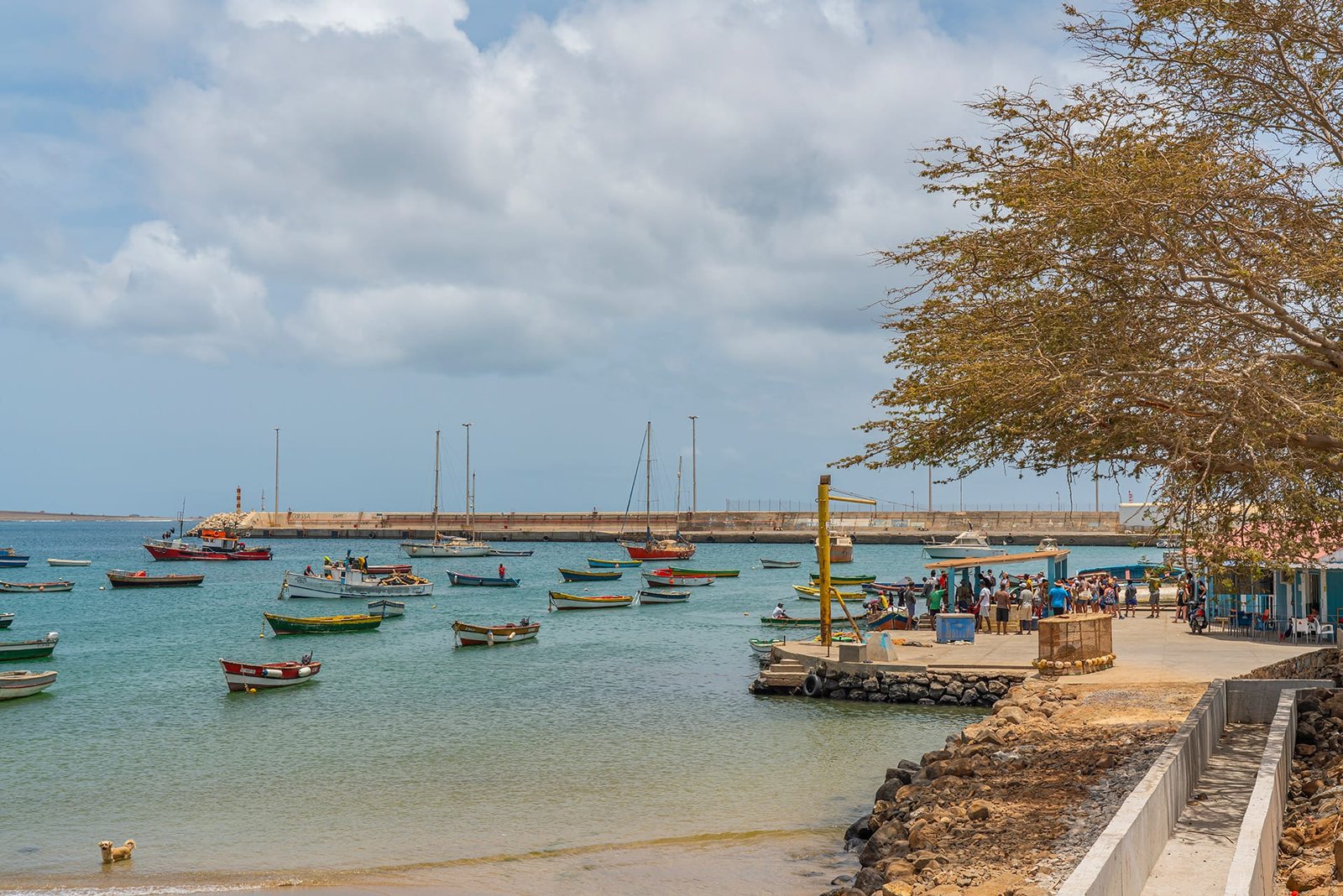
Where Sal’s desert plains meet the Atlantic, Palmeira stands — an island lifeline that hums with maritime purpose. Its docks and fuel tanks, fishing skiffs and container cranes tell a story seldom told in guidebooks: Sal’s working pulse, driven by sea and salt.
Palmeira means ‘palm tree’ in Portuguese. Located on the northwestern part of the island, a small and colourful fishing village is, at the same time, Cape Verde’s third most important port in terms of commercial freight – almost all goods imported to the island get through Palmeira – and passenger transport traffic. It’s also home to maritime tourism industries, particularly those related to recreational boating. Therefore, it’s easy to guess that the port is the heart of the village.
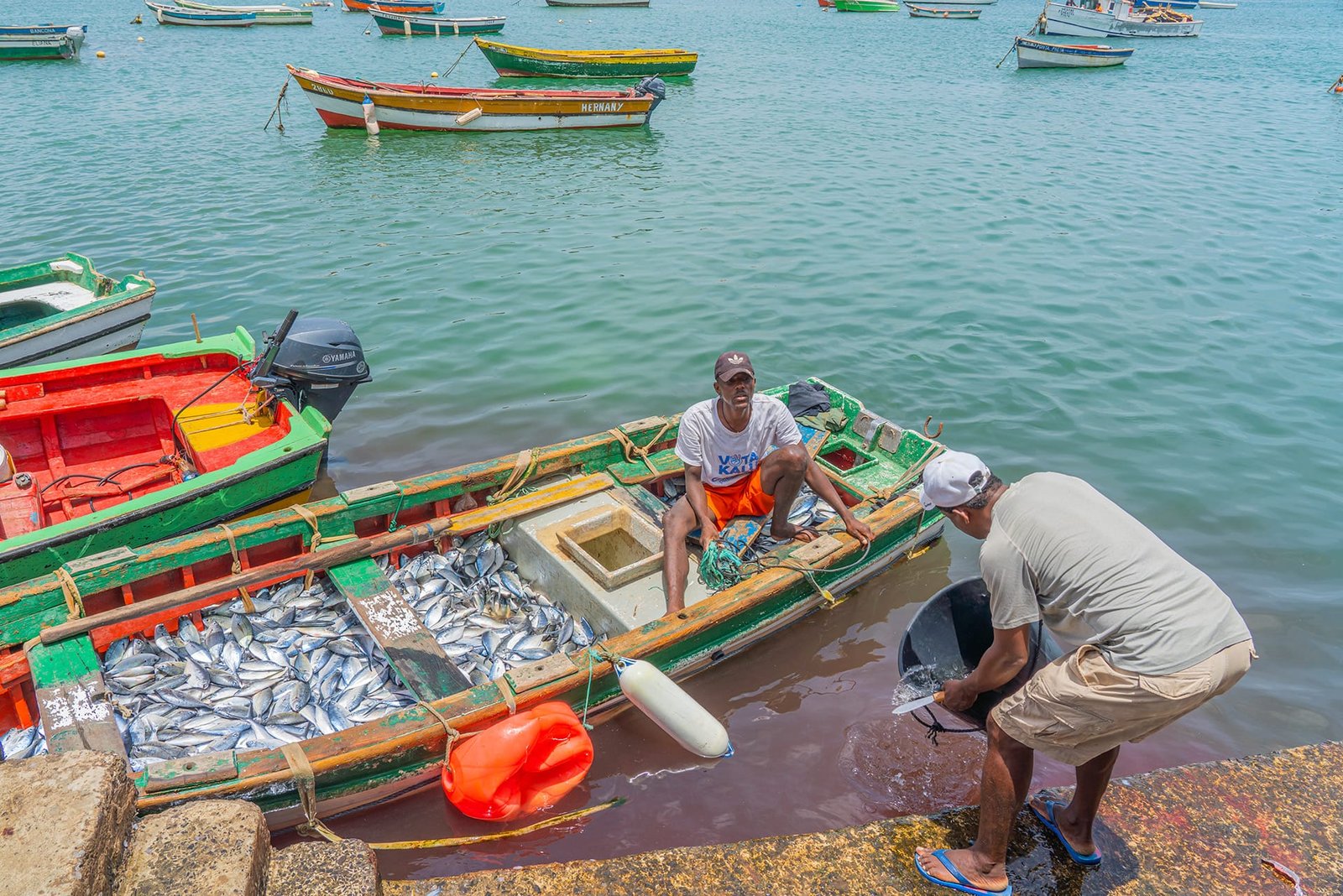
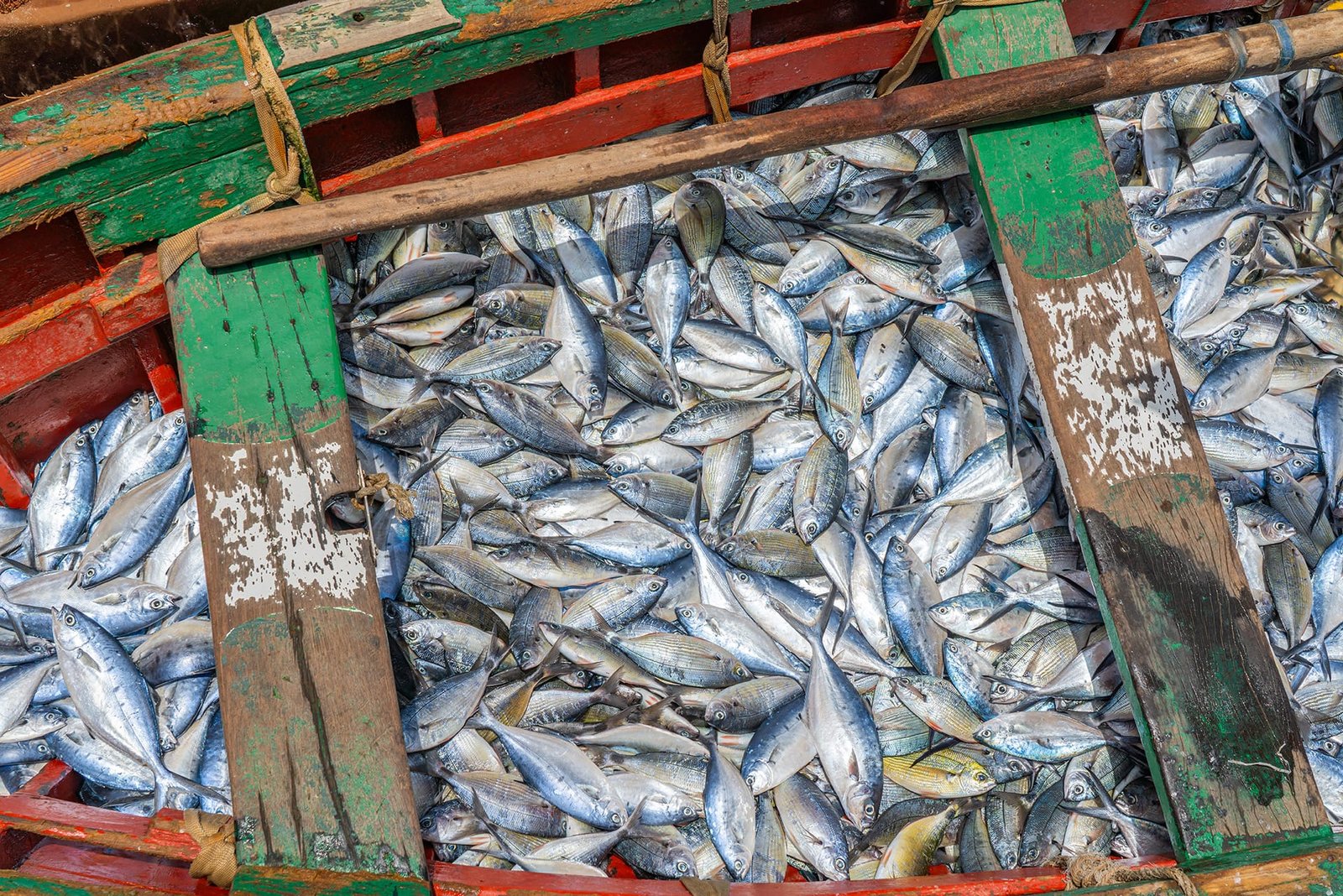
Hardworking fishermen unload tons of fresh fish and clean them on the harbour bank during the day, preparing and selling them straight from the tables, buckets or small wooden boats. It’s a view admired and photographed daily by many tourists. At night, especially on Sundays, the pubs and restaurants of Palmeira resound with lively local music, inviting all to eat, drink, and dance.
Google Maps: Palmeira, Sal, Cabo Verde
Coordinates: 16.7583° N, 22.9789° W
Population (2010): 1,420
Palmeira is the most important port on the island. Almost all of the products imported to Sal come through it, mainly from Tenerife and Portugal.
History of Palmeira: A Port Born of Salt and Seafaring
In 1720, an English captain named Roberts came to Cabo Verde in search of livestock and salt, which he intended to take with him on his voyage to the English Caribbean islands. He noticed a small settlement at the Palmeira location and described it as “nothing more than a small cluster of fishermen’s cabanas or huts”. On his next visit, the Captain wrote that he came upon a few dozen men and two women sent to Sal from the Island of São Nicolau. The men made their living by butchering nesting sea turtles and salting their meat. Later on, in 1747, Jacques-Nicolas Bellin mentioned the village as “Palmera” on his map.
Palmera’s localisation – in the bay on the island’s leeward side – made it easily adapted as a small fishing harbour, expanded later as Sal grew in importance.
Port’s Growth
Built in 1986, the Port of Palmeira underwent its expansion and remodelling works in two phases, the first in 2010 and the second in 2015. The works of the first phase expanded the existing quay by 30 meters in length, added a new ninety-meter-long pier, a roll-on / roll-off ramp in concrete, a container park with 2 hectares, a Ro-Ro yard with 6900 m2 and a building with a container scanner. The works of the 2nd phase contemplated the construction of a new quay 150 meters long with a width of 115 meters, 35 meters wide and 12 meters deep, whose function will be the reception of large ships.
From Wood to Steel: A Modern Port Emerges
Today, Palmeira is Cape Verde’s third busiest cargo port. Between 2015 and 2017, a substantial breakwater was constructed, reinforced with ACCROPODE™ II armour, effectively turning an exposed rodeo into a safe harbour. The upgraded infrastructure, handled by ENAPOR and developed by Mota-Engil, added a new berth, better handling capacity, fuel pipelines, and even a passenger terminal. An EU-backed second-phase expansion worth €10 million began in 2024, extending container yards and improving customs facilities.
Daily Rhythms: Nets, Cranes, and the Sea
Mornings begin with fishermen launching aged skiffs — lateen sails replaced long ago by outboard motors — but ritual remains the same. They return at mid-morning, their catch gutted by hand on the quay. Around them, containers are loaded or unloaded, fuel trucks roll in, and customs officers guide visiting yachts. In quieter moments, fishermen challenge one another at ouril (mancala), children race across packing crates, and lunch is a communal bowl of cachupa.
By afternoon, visiting catamarans moor alongside hardworking lighters. Onshore, a pastel-painted café hums with chatter in Portuguese and Cape Verdean Creole.
The port doesn’t accommodate cruise ships, but for many, this is the authentic Cape Verde: unscripted, industrious, human.
Where Village Meets Industry
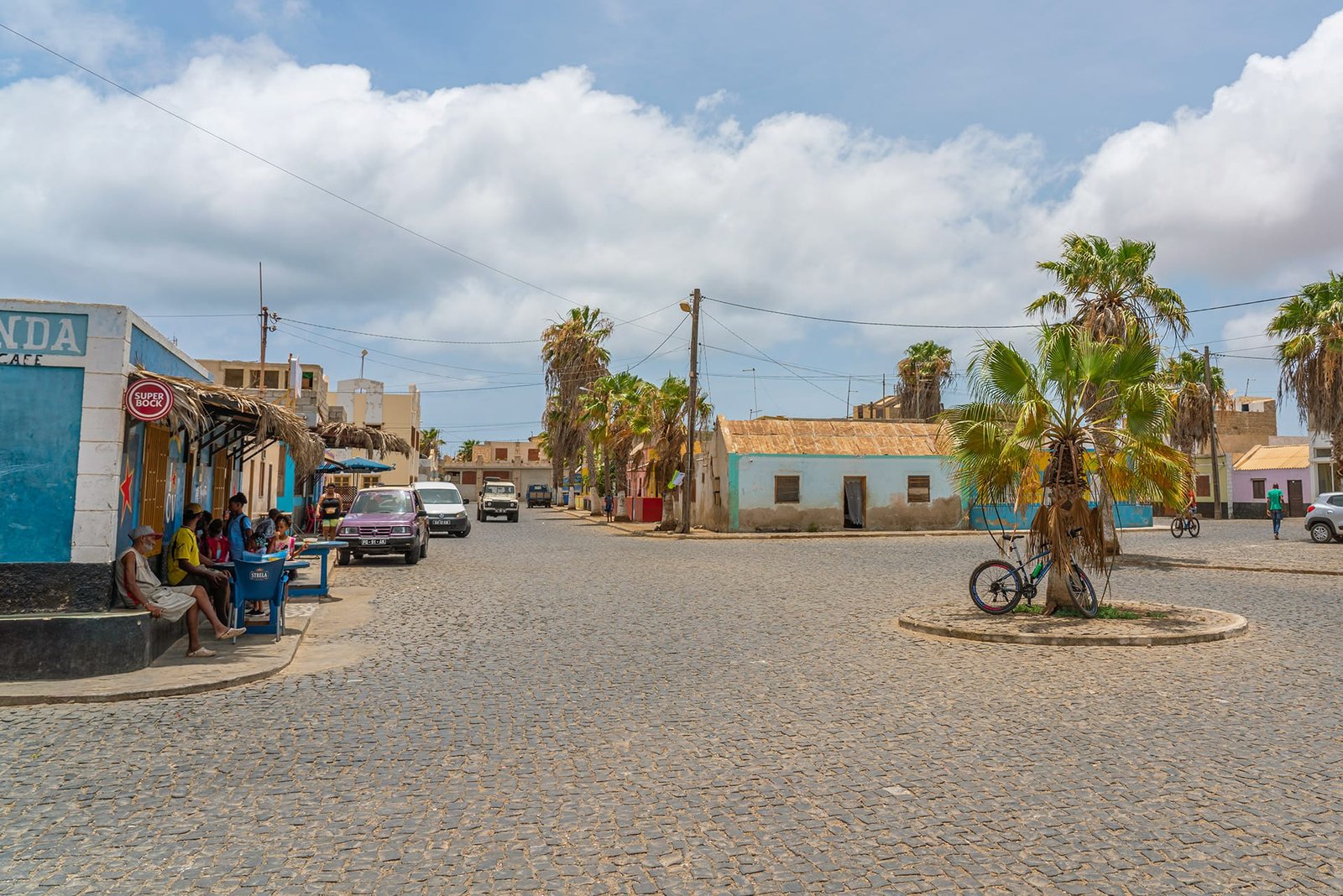
Walking through Palmeira, one finds the village intricately woven into the fabric of port life. A modest church stands amid cargo storage and fuel tanks. A small municipal library and a cemetery pay tribute to fishermen and workers lost at sea. Behind the harbour, clusters of original stone shacks — once homes to fishermen — still stand, some converted into workshops or storage spaces. Nearby, an oasis in Ribeira de Fontona supports small-scale vegetable farms irrigated from underground aquifers. Church bells sometimes jostle with the horn of an inter-island ferry.
Challenges at the Water’s Edge
Despite recent upgrades, Palmeira faces structural and environmental pressures. The breakwater and quay are exposed to Atlantic swells. Concrete erosion is ongoing. Traffic increases the risk of congestion, and sea-level rise poses long-term concerns. The Environmental Impact Assessment for the 2008 expansion noted that future dredging and berth lengthening would be needed to handle larger ships. Local voices advocate for additional seawall reinforcement, waste management, and preservation of fishing traditions amid the expansion of the industry.
Why Palmeira Matters
Palmeira is not Sal’s postcard. It is its backbone. It supplies diesel to keep planes flying, fish to feed families, goods for hotels, and homes to fishermen raising their nets each day. In many ways, its impact dwarfs the glitz of beach resorts. Those who pause — rather than merely pass by — see the negotiations of modernity taking place: community beside industry, tradition amid trade, village beside port.
Visiting the Port: A Guide
-
How to go: 5 km west of Espargos; minibus and taxi services are frequent.
-
Best times: 6–10 am for landings, 2–5 pm for departures and dock activity.
-
Do: Chat with fishermen, sample cottage café food, and respect barricades.
-
Don’t: Climb cranes, waste time near fueling tanks, or enter restricted zones.
-
Nearby: Praia Fontona, Buracona, Blue Eye, and short ascents into the rural Fontona oasis.
Bibliography
-
Wikipedia. Palmeira, Cape Verde.
-
Wikipedia. Sal, Cape Verde; Manuel António Martins.
-
Yacht Mollymawk. “Cape Verde – Sal – Palmeira.”
-
ENAPOR (Cape Verde Port Authority). Porto da Palmeira.
-
Concrete Layer Innovations. “Palmeira Port Expansion and Modernization Phase II.”
-
Africa Development Bank & Cabo Verde Appraisal Reports (2018).
-
MaritimAfrica. “Signing of contract for second-phase extension at Palmeira,” Sept 2024.
-
KidsKiddle. “History of Sal Island.”
-
NoLimitsAdventure.com. “Palmeira: Village of the Fishermen.”
-
TripAdvisor. “Port of Palmeira – visitor impressions.”
-
Cidade Municipal do Sal. Local government site.
-
Revista de Estudos Atlânticos (2014). “Coastal Infrastructure in Cape Verde.”
-
University of Lisbon, Dept. Geography (2022). Climate resilience and infrastructure.
-
Field interviews with Palmeira fishers, dockworkers & officials (2023–2025).