Related Posts



Cachupa: The Most Popular Cape Verdean Stew (Recipe)
There’s a familiar hum in Cape Verdean kitchens when a large pot of Cachupa simmers — a ritual of comfort, culture, and community. More than a meal, Cachupa is symbolic: a slow-cooked tapestry woven from maize, beans, tubers, greens, and savoury proteins. It speaks of endurance, adaptation, and the spirit of morabeza — Cape Verdean hospitality.
Cachupa is a traditional dish of Cape Verde, available in two main types: Cachupa Rica (meaning “rich”), which is made with various types of meat, and Cachupa Pobre (meaning “poor”), which is made with fish only. The distinction between the types of Cachupa is related to the fact that Rica contains meat, which makes the dish more expensive and accessible only to the better-off. At the same time, the poor version, Pobre, is more accessible to all.
Cachupa Rica ("Rich")
A festive version brimming with varied meats—pork, beef, sausage, chicken—or even fish, alongside tubers and greens. It’s commonly reserved for celebrations, Sundays, or when guests are expected.
Cachupa Pobre ("Poor")
A leaner, often vegetarian version featuring hominy, beans, cassava, sweet potato, and kale or cabbage—representing everyday sustenance with ingredients readily available in rural households.
There are many types and variants of cachupa because each island has its regional variation, and every family likes to prepare it differently. It’s easy to adjust cachupa recipes to accommodate household preferences. Marinated chicken, beef or fresh tuna can substitute for classic pork. And corn, beans and greens are one of nature’s healthiest vegetarian combinations.
The preparation can be an authentic ritual, starting with placing corn and beans in cold water for the entire day and then pan-cooking them for hours. Cassava, meat, sausages, fish, eggs, collard greens, and sweet potatoes make the dish rich, tasty, and colourful.
It’s a big dish, cooked for many, but nothing from it is ever wasted.
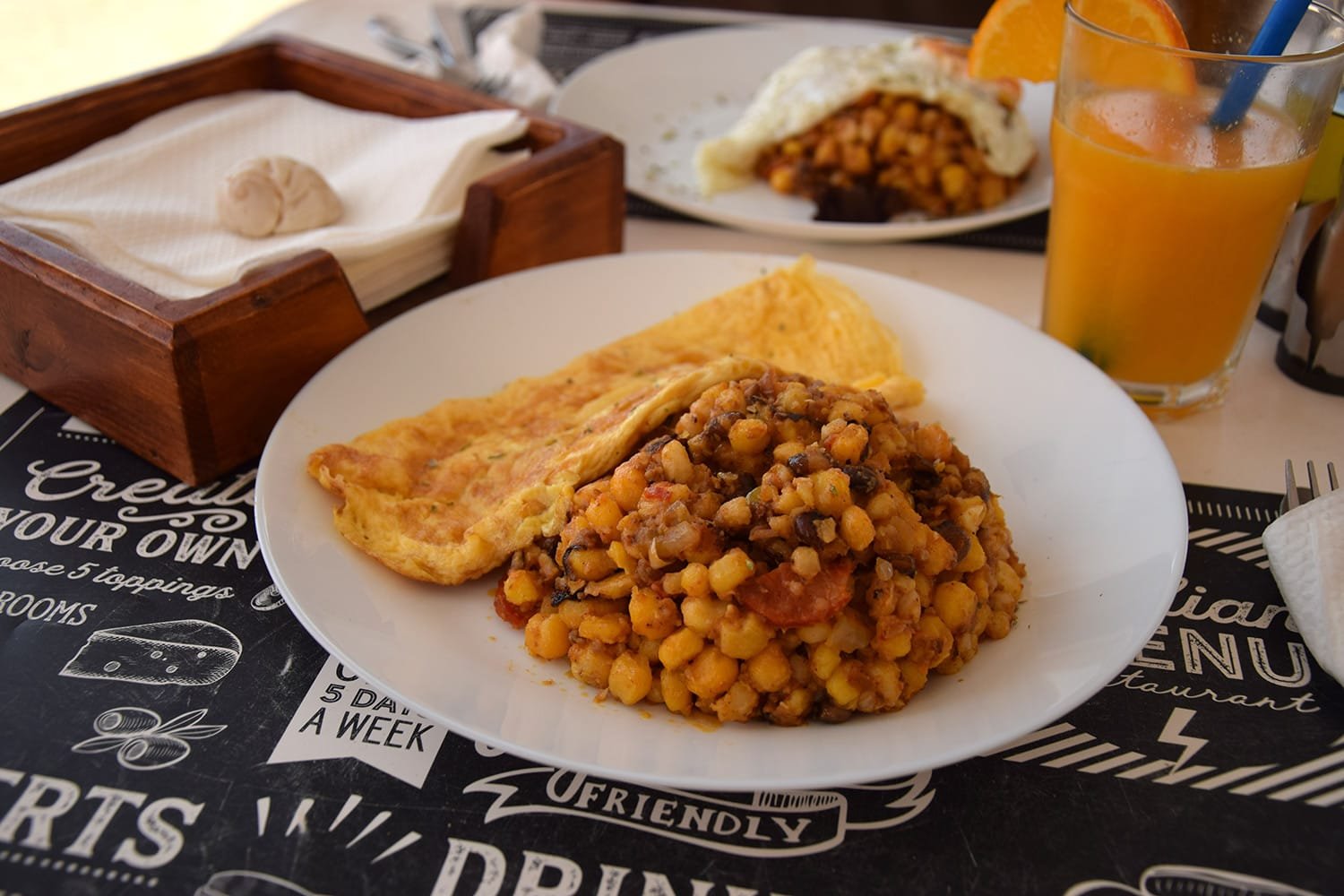
Leftover cachupa for breakfast!
Cachupa leftovers can still be reheated and served as breakfast with ground sausage, omelette or eggs. The dry, re-fried variation of the dish is called Cachupa frita, cachupa guisada or cachupa refogada ( meaning “fried Cachupa“). This tasty and powerful kick of energy in the morning has a lot of fans among locals. There is no better breakfast than cachupa frita to prepare the organism for all day’s work on a fishing boat.
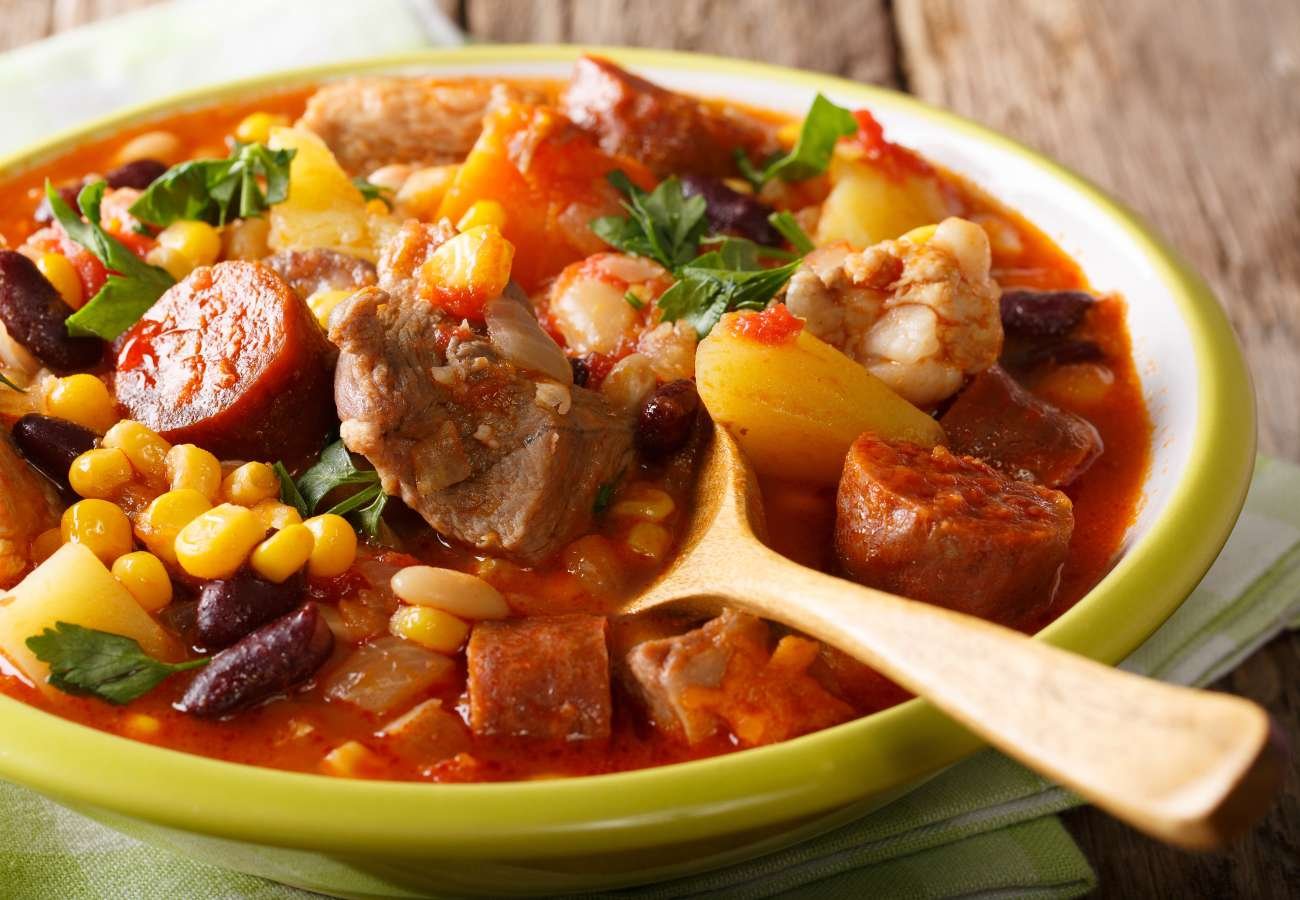
Cachupa Rica (which translates to "rich") – with meats
Cachupa ku ovo stralado (with a fried egg on top)
Origins Rooted in Survival and Solidarity
Cachupa’s provenance stretches back centuries, emerging as a creative response to scarcity under colonial rule. With drought, famine, and limited agricultural resources, island families relied on hearty staples — hominy, beans, and root vegetables—enhanced by occasional meat or fish. Over generations, this humble, porridge-like stew has been transformed into a national dish, emblematic of survival, resilience, and tradition.
Anatomy of a Hearty Stew
A classic Cachupa delivers a comforting and complex layering of ingredients:
- Hominy (milho): Soaked and softened corn kernels that serve as the base.
- Beans: Typically kidney, lima, or butter beans, adding bulk and earthy richness.
- Tubers and Vegetables: Cassava, sweet potato, pumpkin, cabbage, carrot, plantain, and sometimes squash or green banana.
- Proteins: Depending on means and region—pork ribs, bacon, linguiça, morcela, chicken thighs, salted cod (bacalhau), or fresh fish like tuna or grouper.
- Aromatics: Onion, garlic, bay leaves, olive oil, tomato paste, bell peppers, paprika, and local herbs.
Each element is added in deliberate stages, allowing flavours to meld slowly over several hours.
A Nutritious, Sustainable Staple
Nutritionally, Cachupa is impressively balanced. Corn and beans provide complete plant protein; root vegetables offer fibre and vitamins; greens deliver iron and antioxidants. When made with fish or lean meats, it rivals any Mediterranean or West African staple in health value.
From a sustainability standpoint, it’s a local, seasonal, low-waste dish. Its ability to stretch into multiple meals and adapt to available produce makes it a smart, ethical example of traditional food systems done right.
The Ritual of Cooking Cachupa
Preparing catchupa often begins the night before, when corn and beans are soaked to soften. In the morning, meats are browned or parboiled, aromatics are layered, and vegetables are chopped.
The dish simmers for three to five hours, absorbing flavour, fat, and heat. There’s no rush. Many Cape Verdeans agree it tastes even better the next day, especially when turned into Cachupa Guisada (or Cachupa Refogada): the thickened leftovers reheated with oil and sometimes served with a fried egg or sliced sausage on top.
Cooking the traditional Capeverdean stew is often a collaborative effort — an aunt stirring the pot, a cousin chopping greens, and a neighbour bringing cassava from her garden. It is a communal act, as much about being together as it is about sharing food.
Why Is Cachupa So Special?
Ingredients
An inventory of the ingredients in cachupa may be a pretty good index of the economic health of a Cabo Verdean family. What’s in the stew often depends on whether someone in the household has a reliable job and can afford to supply the kitchen. That’s why, often before a wedding or other special occasion, families gather together and take care of the ingredients so the dish overflows with sausage, marinated meats, and vegetables.
Most Cape Verdeans who reside in the countryside maintain little gardens to grow mandioca, beans and sometimes other greens to feed (and fatten) a pig for their cachupa.
Cooking
Cooking cachupa from dry ingredients requires as much as four hours over a slow but steady flame. Years of drought have made firewood scarce. Locally produced charcoal is seldom in adequate supply. In rural areas, women and children spend many hours each day gathering firewood (lenha). Despite government subsidies to make bottled gas available to all, its cost is still too high for many.
Climate and Cuisine
Gradually, the effects of drought and its continuing impact on agricultural production and the availability of affordable fuel have combined to transform the culinary tradition of Cape Verde. Cachupa rica has become an expensive speciality, something a family can only hope to serve on special occasions.
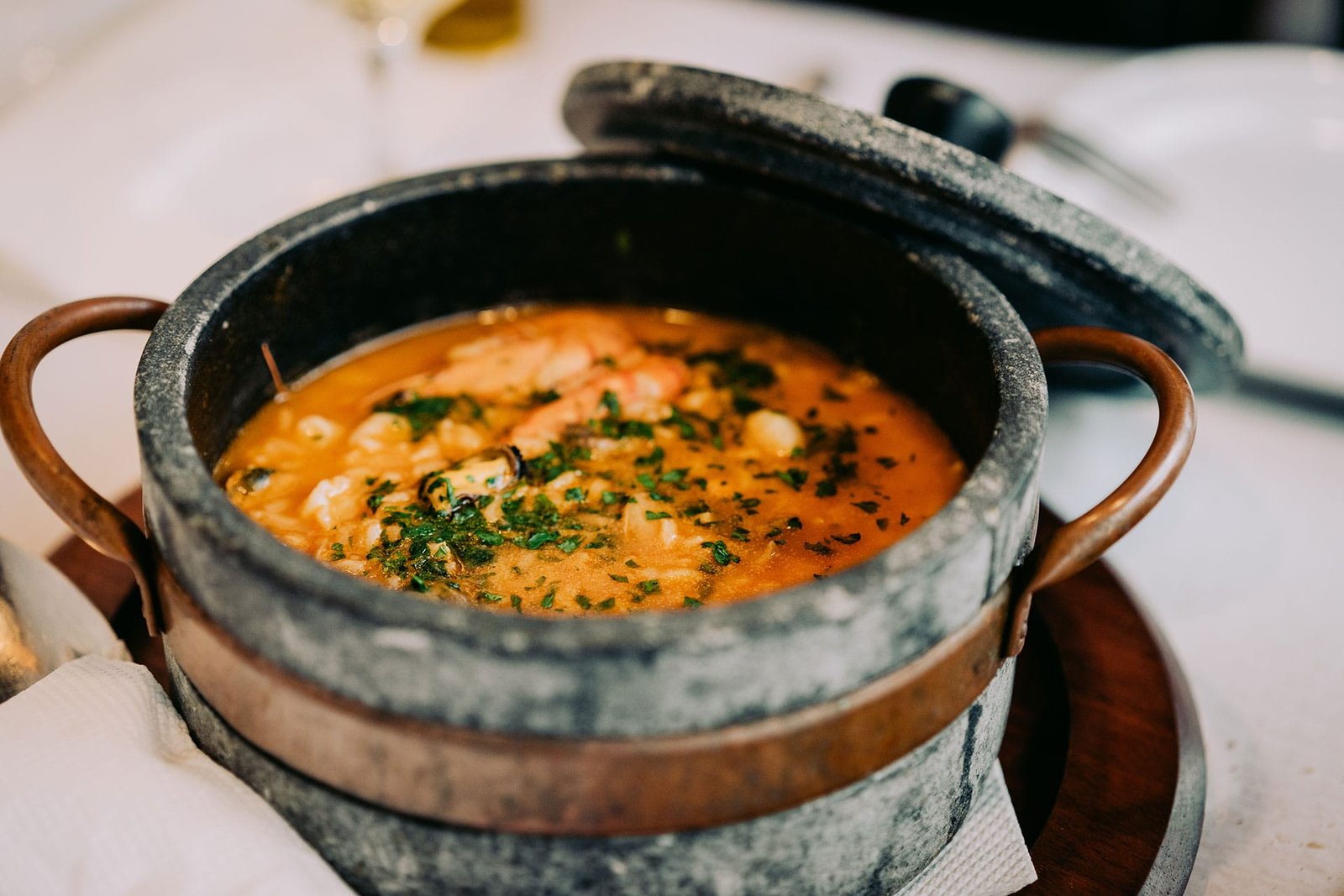
Cachupa: Cooking Recipe
Ingredients:
- ½ kg corn
- 1 cup of white beans
- 1 cup of American beans
- ½ green beans
- 1 whole chicken
- 1 kg pork or other meat cutlet
- 1 kg coarsely diced cabbage
- 1 kg of fresh sweet potato peeled and sliced
- 1 kg of winter squash
- 1 kg of cassava
- ½ kg carrot
- 1 Kg yams
- 1 Kg plantains
- ½ kg Savoy Cabbage
- 1 kg ripe tomatoes
- 2 large onions
- 3 cloves of garlic
- 150 dl Olive Oil
- 150 dl White Wine
- salt
- 2 bay leaves.
Preparation
Soak the corn and beans the day before in cold water. Cook them in a pan with cold water for 2 hours and 30 minutes. Season the cooking water with onion, garlic and olive oil. Once cooked, add the corn and beans to the cabbage, cassava, banana, yam, carrots, and other vegetables. In a casserole dish, put the onion, garlic and olive oil with the tomato, the meat cutlet, and the chorizo – all chopped and sautéed with white wine. Add the corn, beans and vegetables to the pan and season with salt, letting it simmer for 30 minutes over low heat. Serve on a plate with chorizo slices.
Serving
For best results, let the cachupa sit covered and off the flame for at least twenty minutes before serving. The corn will absorb spices and salt, and the bean and the “gravy” will take on their characteristic textures. Arrange the meats and vegetables on a large platter and serve the corn and beans from a bowl. Some people may want to add a little Tabasco or piri-piri sauce on top for a spicier taste.
Every cachupa recipe is different.
Check also:
- Traditional Dish of Cape Verde – Full Recipe on Crumb-Snatched by Crystal;
- A Hearty Comforting Cape Verdean Stew on Travelandmunchies by Nadia Boachie;
- Catchupa step-by-step – (YouTube video) by Kayla Tolentino;
Tips for Perfecting Your Cachupa
-
Soak corn and beans overnight for uniform cooking.
-
Cook low and slow — rushing ruins the melding of flavours.
-
Add ingredients in layers: hard vegetables and meat first, leafy greens and soft vegetables last.
-
Rest before serving — let the flavours develop.
-
Use leftovers well: fry them up with eggs or sausage for an iconic Cachupa Guisada breakfast.
If you’re cooking outside Cape Verde, substitutions are possible, though never perfect. Canned hominy, for instance, can be used, but won’t yield the same texture. Still, the essence of the dish, its care, community, and generosity, can be preserved wherever it’s made.
Bibliography / Sources
- Field observations and interviews with Cape Verdean home cooks (Sal and São Vicente, 2023–2024).
- Almeida, Raymond. Cachupa di Cabo Verde. University of Massachusetts Dartmouth, 2006.
- Traditional Cachupa of Cape Verde on Boa Vista Official website;
- Traditional Dish of Cape Verde – Full Recipe on Crumb-Snatched by Crystal;
- Catchupa di Cabo Verde by Raymond Almeida;
- Wikipedia. The Free Encyclopedia.