Related Posts


Where to Stay on Sal Island: Choosing The Best Place
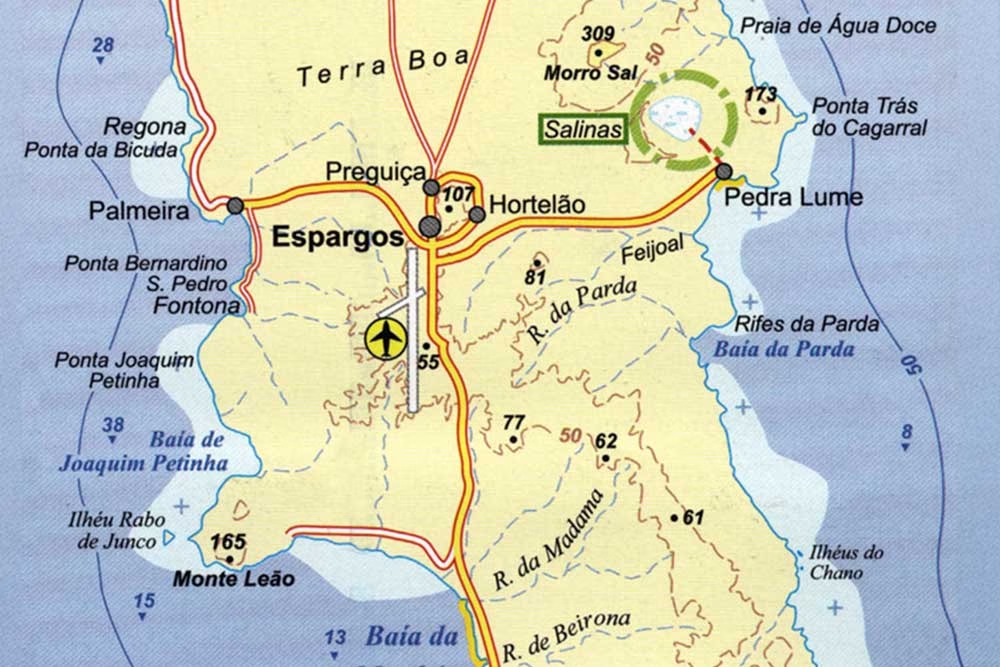
Deciding where to stay on Sal depends on your priorities: whether you want the ease of a beach resort, local village life, or a balance between the two. The island has transformed from a barren salt flat into a vibrant yet low-key beach destination, basking in 350 days of sunshine a year and attracting holidaymakers as much as remote workers. Below, we’ve broken down all of Sal’s main areas and lodging options, with tips for both short visits and longer stays.
Santa Maria – Beachside Convenience and Nightlife
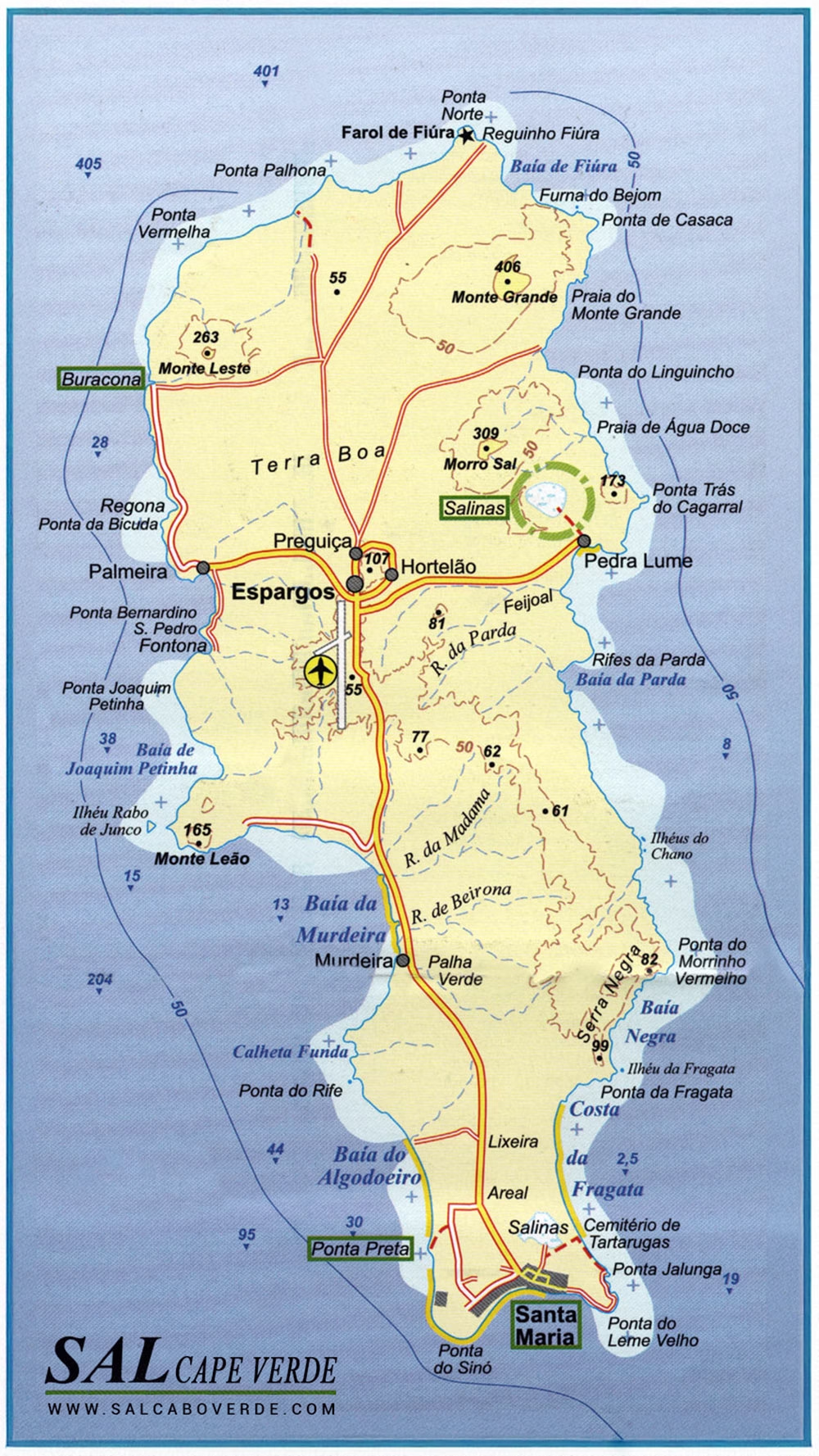
Santa Maria, at the island’s southern tip, is Sal’s central tourist hub and beach lover’s paradise. The town hugs a long curve of soft golden sand dotted with beach bars and watersports centres, and its small centre is packed with restaurants, live-music bars, and surf shops catering to international visitors. Each morning, the old pier comes alive as local fishermen haul in their catch, giving travellers a slice of authentic island life amid the resorts. It’s a lively, friendly place where you can walk everywhere barefoot if you like – from your hotel to a café to the surf school down the street.
Lodging in Santa Maria
Lodging in Santa Maria ranges from humble guesthouses to luxury resorts. Many large hotels and all-inclusive resorts line the beachfront “Hotel Boulevard,” offering instant access to sun loungers and ocean views. Newer 5-star resorts like the Hilton Cabo Verde Sal or the Riu Palace Santa Maria feature multiple pools, spas, and on-site dining, at prices that can reach a few hundred euros per night in peak season. If that’s beyond your budget, don’t worry – Santa Maria also has plenty of affordable options. A few blocks inland from the beach, family-run pensões and boutique B&Bs offer clean rooms and breakfast for a fraction of the price (often under €50-60 a night). Self-catering apartments are another popular mid-range choice, ideal for families or those who want a kitchen. In fact, Santa Maria offers “a mix of apartments, guesthouses, and coliving options,” not just big hotels, so backpackers and digital nomads will find their crowd here as well.
Who should stay in Santa Maria?
Just about anyone, especially first-time visitors. If you want to step out of your room and onto a gorgeous beach, have dozens of dining choices, and go dancing or listen to live Cape Verdean music at night, Santa Maria is perfect. Watersports enthusiasts base themselves here too – you’re minutes from surf and dive shops, and Kite Beach (a world-famous kitesurfing spot) is a short ride away. The atmosphere is touristy but in a relaxed, Cape Verdean way: outside of the resort enclaves, local life still hums along in town alongside the tourism. The main downsides are that Santa Maria is the priciest area (especially for oceanfront hotels and in high season), and you won’t experience much of traditional Cape Verdean culture in the resort bubble. That said, even in Santa Maria, you can find local touches – from open-air grilled seafood dinners to the colourful souvenir market where Senegalese vendors sell batik and carvings. And if the tourist scene ever feels too much, the rest of the island is easily reached by taxi or day tour.
Nearby attractions
Santa Maria’s huge appeal is the beach itself – you can snorkel, take boat excursions, or simply people-watch on the sand all day. The Santa Maria Pier is a must-visit around noon when fishermen unload their catch and gut fish on the spot (an impromptu fish market that doubles as entertainment). For a break from the beach, consider an island tour that will take you north to see the surreal salt flats of Pedra de Lume (where you can float in a salt-crater lake like the Dead Sea) and the shimmering “Blue Eye” lagoon at Buracona. All of these excursions can be easily arranged from Santa Maria, meaning you can enjoy local adventures by day and be back in town for a beachfront dinner.
Read also: Santa Maria: Walk Through The Most Popular Town
Note: Some large resorts using the “Santa Maria” name aren’t directly in town. For instance, the Melia resorts at Algodoeiro Beach and the Robinson Club on Ponta Sino are each located a short distance away. These resorts provide tranquil settings and are only a 5-10-minute taxi ride from the centre, but walking to town amenities isn’t practical. Independent restaurants and shops are also limited in these areas, so if you want options beyond the resort buffet, keep this in mind.
At a Glance:
- Pros: Gorgeous beach at your doorstep; the widest selection of hotels, resorts, and eateries; lively nightlife and music; a walkable town with local culture and tourist conveniences intertwined. Most tours and activities depart from here.
- Cons: Can be crowded and busy in peak season; food and lodging prices are higher than elsewhere on Sal; a heavily tourist-oriented vibe (less of the “remote island” feel); noise and activity might not suit those seeking solitude.
Vila Verde – the Self-Catering Haven
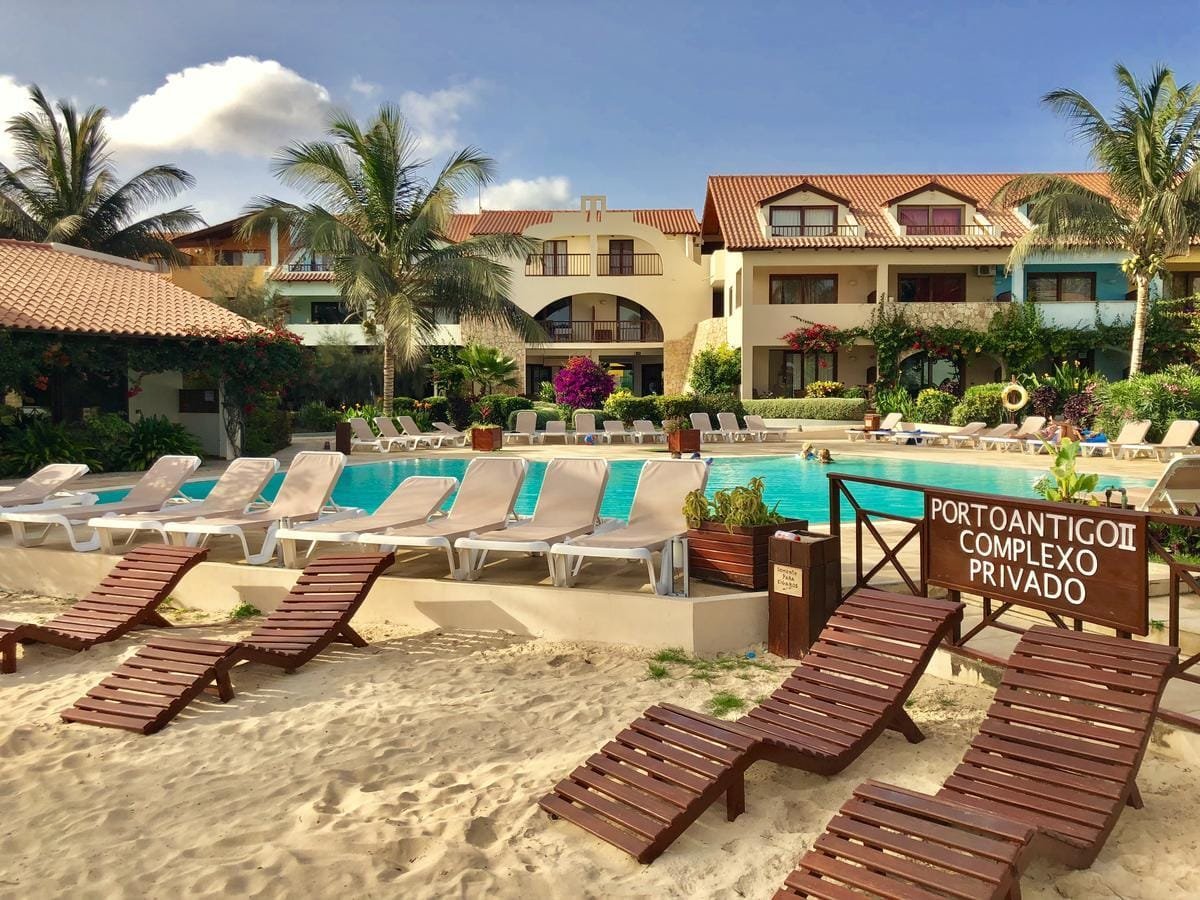
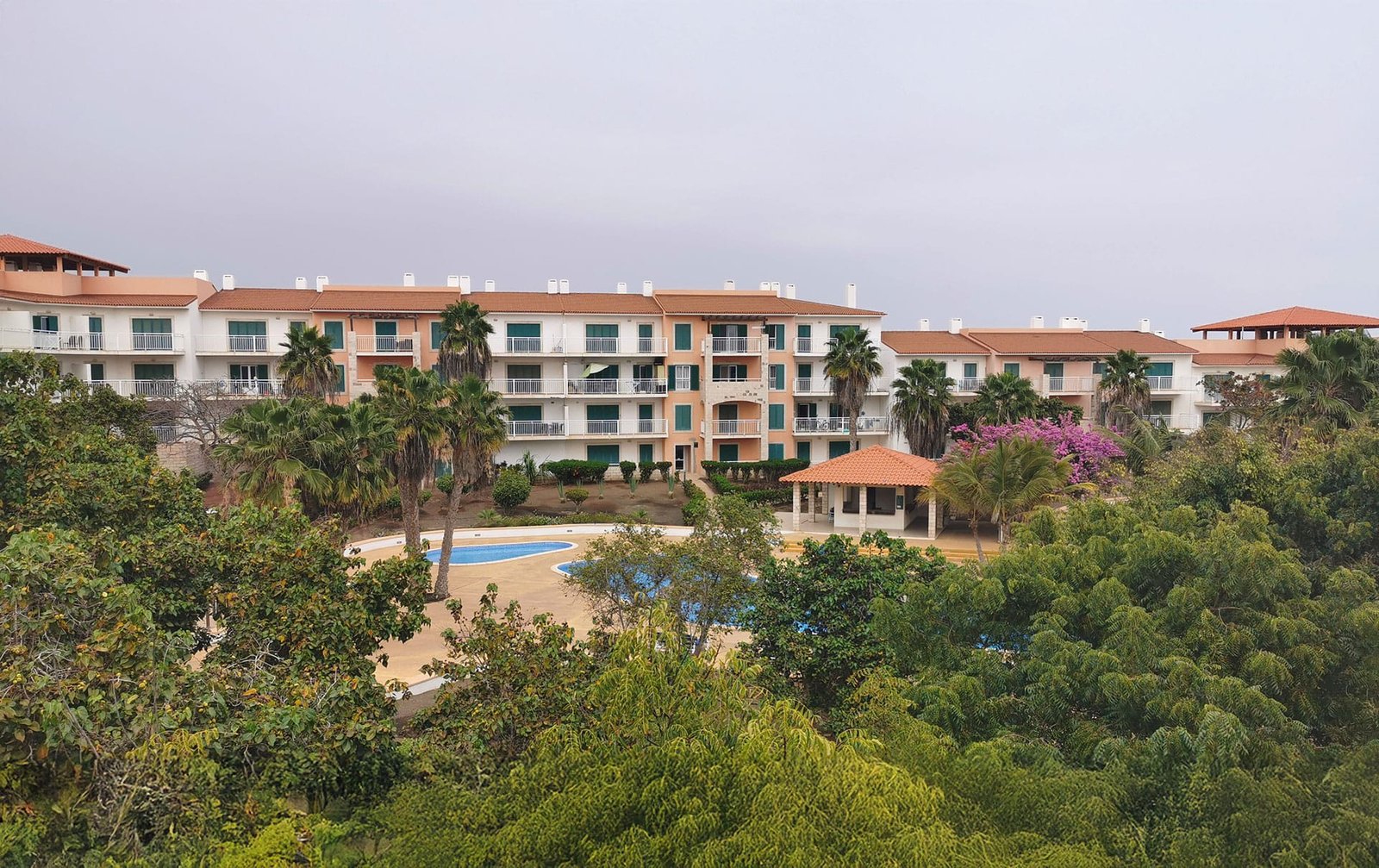
Just outside Santa Maria, on the road toward Ponta Preta beach, lies Vila Verde, a purpose-built community that has become a favourite among independent travellers, kitesurfers, and long-term visitors. Technically, this could be considered part of greater Santa Maria, but it feels like its own little enclave – a self-catering haven a bit removed from the tourist fray. Vila Verde is a large complex of pastel-colored apartments and townhouses, complete with its own gardens, pools, small convenience stores, and even a café or two. It was developed in the 2010s and looks somewhat like a modern Mediterranean holiday village transplanted to Cape Verde.
What draws people here?
In a word, space. The apartments are spacious and fully furnished with home-like amenities. You get a kitchen equipped for real cooking, a washing machine (crucial for those packing light or staying long), reliable air conditioning, and often strong Wi-Fi. It’s a stark contrast to a typical hotel room. The nightly rates are reasonable – usually €40–80 per night for a one or two-bedroom unit – and if you commit to a more extended stay of a few weeks or months, prices drop further (monthly rentals in Vila Verde average around €400–700). This makes it extremely popular with remote workers, digital nomads, and families who want to stretch out and avoid eating every meal at a restaurant.
Pros and Cons of Vila Verde
Vila Verde’s location has both pros and cons. On the plus side, it’s within walking distance (about 10 minutes) of Ponta Preta, which is one of Sal’s premier beaches for surfing and kiteboarding. In winter months, you’ll see waves crashing and kites dancing in the air – serious surfers love being based here so they can be first in the water at dawn. The complex also runs free shuttles to Santa Maria town (around 2 km away) and to other nearby beaches, which helps since the immediate surroundings are quiet.
This brings us to the downside: you’re not in town. If you stay at Vila Verde, you can’t just step outside your door to a variety of restaurants or bars – you’ll need to hike or ride into Santa Maria for that. Walking to town is doable (about 25–30 minutes), but note that the road isn’t the most pedestrian-friendly (no sidewalks and quite dark at night). Many folks staying here will opt for an occasional taxi ride back in the evenings, especially if they are carrying groceries or have been out.
Laid-back and Community-Oriented
Another benefit of Vila Verde is that it provides a middle ground between resort and residential. There’s an on-site reception and maintenance team, like a hotel, and the Água Hotels Sal Vila Verde even offers an all-inclusive meal plan for guests who want it. So you can have a self-catered apartment while still adding hotel-like services. Yet the atmosphere remains laid-back and community-oriented. You might meet other travellers at the pool or see remote workers typing away on their balconies. It’s quieter than central Santa Maria – great for focusing on work or getting a good night’s sleep – but you’re only a short hop from the action when you want it.
At a Glance:
- Pros: Spacious apartments with kitchens (excellent for extended stays or families); better value for money on longer rentals; quieter environment, away from tourist noise; close to Ponta Preta beach (top kite/surf spot) and decent shuttle services.
- Cons: Somewhat isolated without a car – not many shops or eateries on-site; need to plan trips into town for supplies or nightlife; walking after dark is not ideal (taxis recommended); on-site amenities (like cafes, bars) close early, so evenings are very low-key.
Espargos – Local Life on a Budget
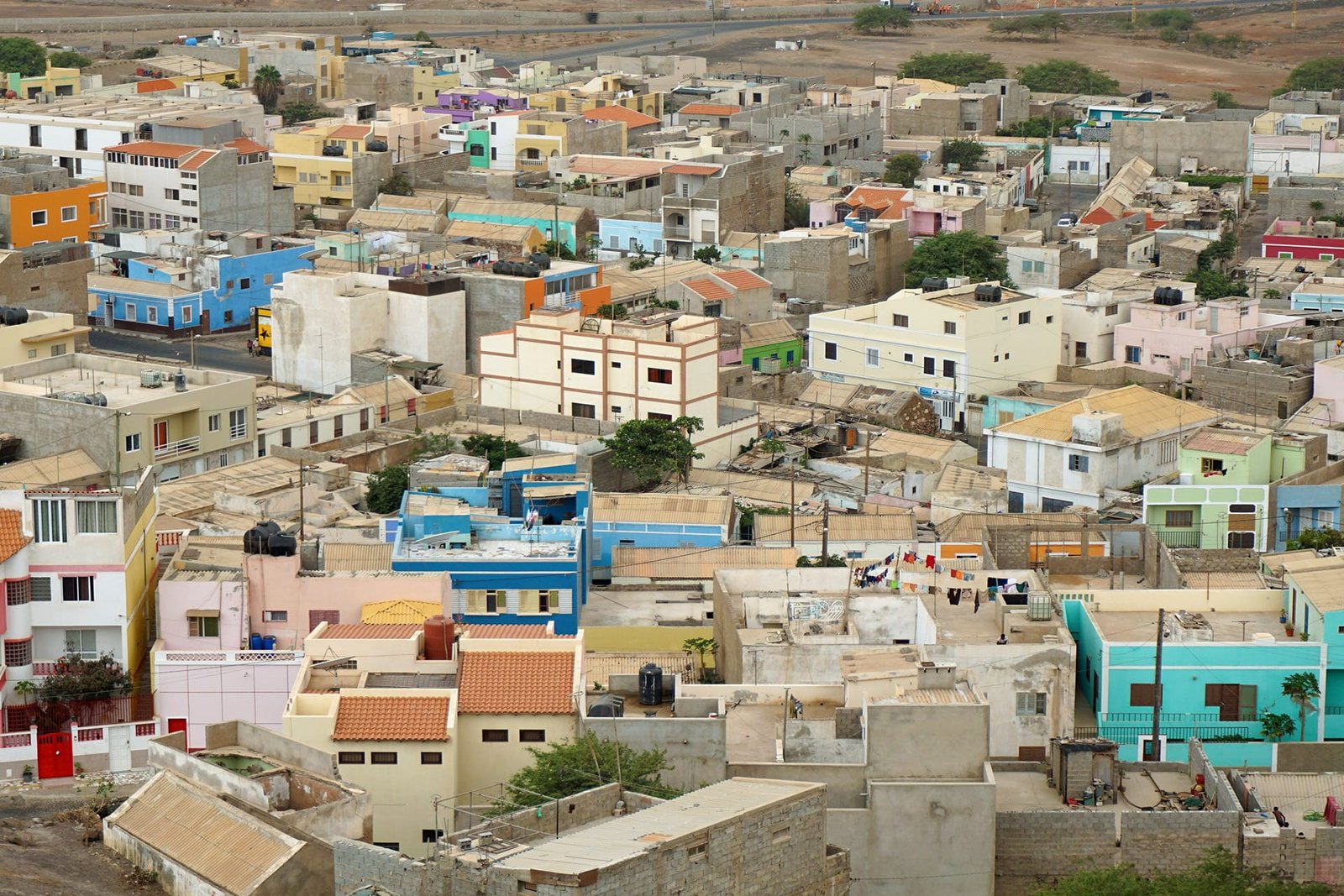
Away from the beaches, Espargos is Sal’s modest capital city, located roughly in the centre of the island. Staying in Espargos is all about immersing yourself in the local culture. You won’t find resorts or seaside views here – instead, you’ll wake up to the sound of roosters and children walking to school, and you can eat where the locals eat (grilled chicken and cachupa stew at down-to-earth eateries) without tourist prices on the menu.
Accommodation in Espargos
Accommodation in Espargos is limited to a few simple hotels and guesthouses (residencials), but they tend to be far more affordable than those in Santa Maria. Travellers on a tight budget or those sticking around for a while might base themselves here to save money. A basic room in town might cost under €30-40 per night, whereas a beach resort might cost many times that. Even in peak season, you can snag a deal in Espargos – one recent search showed average hotel rates around $58 in low season, rising to about $344 in late December, still generally lower than Santa Maria’s holiday rates.
Why stay in Espargos?
If you want to experience Cape Verdean daily life or prefer a quieter environment, Espargos has a certain charm. You’ll see stray dogs in the shade of pastel-painted buildings and hear Creole chatter at the municipal market. The town is minutes from Sal’s airport and equidistant to many sights, making it a convenient base for exploring with a rental car. For example, Pedra de Lume’s salt lake and the Blue Eye cave pool are both closer to Espargos than Santa Maria, so you can visit before the tour buses arrive. Cost is another plus – you can find local lunch for a few euros, and taxis or minibuses to anywhere on Sal are inexpensive.
On the downside, Espargos is completely inland, so you’ll be commuting 20–30 minutes to reach any beach. There are frequent aluguer minibuses and affordable taxis, but it’s not as convenient as strolling out of a Santa Maria hotel onto the sand. Nightlife in Espargos is very low-key (a few local bars and maybe a karaoke spot), and English is less commonly spoken here, so a bit of Portuguese or Creole will go a long way. In short, Espargos is best for culturally curious travellers and long-stay visitors on a budget who don’t mind trading beach proximity for a more local lifestyle.
Read also: Espargos: Capital of the Island in the Heart of Sal
Nearby attractions
Espargos itself is small, but you can hike or drive up Monte Curral, the hill overlooking town, for a panoramic view of the entire island – from the salt pans gleaming white on the east coast to the hotels of Santa Maria in the far south. Just outside Espargos is Palmeira, the main port village, where you can watch colourful fishing boats and perhaps arrange a dive trip. (Palmeira also has a couple of guesthouses, offering a quiet seaside town stay for the truly adventurous, though options are very limited.) From Espargos, you’re about 5 km from Pedra de Lume’s salt crater and 25 km from Buracona’s Blue Eye – both are easy half-day trips.
At a Glance:
- Pros: Authentic Cape Verdean town experience; rock-bottom accommodation prices; close to the airport and central for exploring the whole island; access to local shops, markets and cheap eateries.
- Cons: Inland location with no beach (you must drive to any swimming spots); very limited tourist infrastructure (tours, watersports, etc. are all in Santa Maria); language may be a barrier in some local spots (more Portuguese and Creole spoken, less English); overall appeal is more functional than picturesque.
Murdeira and Other Quiet Retreats
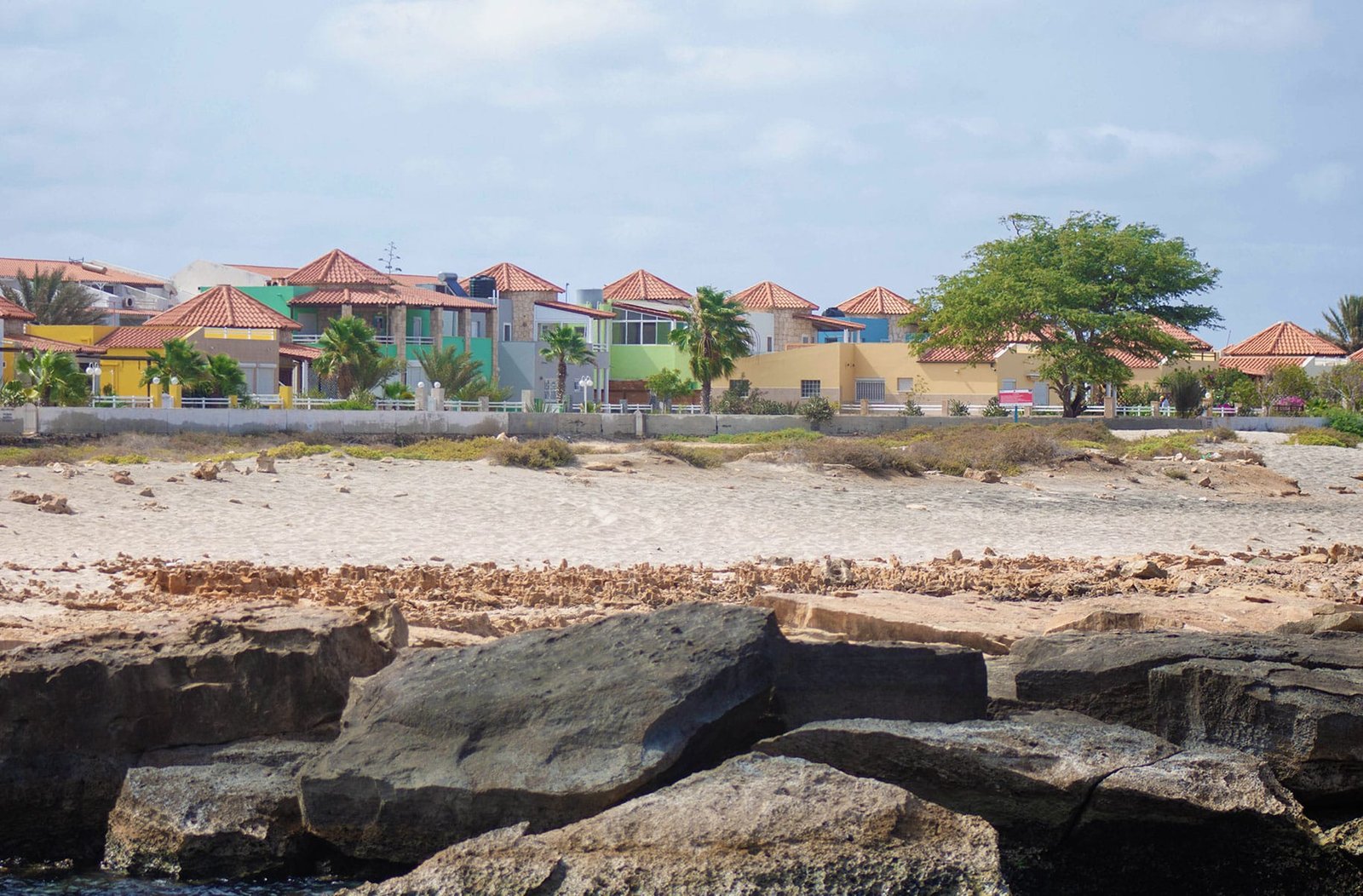
Between Santa Maria and Espargos, along Sal’s west coast, lies Murdeira, a small settlement and bay that has become a haven for those seeking tranquillity. Murdeira Village is essentially a semi-private residential resort area facing a calm, turquoise bay. Aside from the Murdeira Village Resort (a hotel-apartment complex with a pool and restaurant), there’s not much commercial development, which is precisely the appeal.
Guests come here for peace and nature: stunning sunsets, stargazing at night (the desert sky is crystal clear), and the chance to snorkel or swim in Murdeira Bay’s protected waters without crowds. It’s a slower pace of life, perfect for unwinding or focused work if you’re a remote worker craving zero distractions. Birdsong and ocean wind are the loudest noises you’ll hear on a given day.
Staying in Murdeira
Staying in Murdeira is ideal if you have been to Sal before or if you explicitly want to avoid the tourist hubbub. The accommodation on offer is mostly the Murdeira Village Resort suites or private rental villas within the Murdeira community. Prices here tend to be mid-range – often a bit cheaper than Santa Maria’s big hotels, but higher than a simple pension in town. You get a self-contained, safe environment with security and sparse but adequate services (there’s usually a small minimart and the resort’s bar-restaurant).
Just note that you’ll need transport: Murdeira is about 10 km from both Santa Maria and Espargos. Many visitors rent a car or take taxis into town for groceries, dining, or activities. There are a few daily minibuses that pass by, but you can’t count on them late at night.
Read also: Murdeira Bay: Beautiful Reef and Rock Pools
Other Places
Aside from Murdeira, Sal has a few other off-the-beaten-path spots where one might stay. For example, some kitesurfing aficionados stay near Kite Beach on the east coast at basic guesthouses catering to surfers. And as mentioned, the fishing village of Palmeira has a bed-and-breakfast or two (like the informal Yacht Club Sal) where you can fall asleep to the sound of Atlantic waves in a genuinely local town. These niche options are for seasoned travellers who value maximum quiet or a singular focus (be it kitesurfing or immersing in village life) over convenience. They can be wonderfully rewarding, but first-timers will generally be happier in Santa Maria or a well-serviced resort, using tours or day trips to visit these tranquil corners.
Pros and cons
The pros of staying outside the main towns are solitude, a stronger connection with nature, and often lower costs. You might have a whole beach to yourself at sunset. The cons are the flip side of isolation – no shops or restaurants within walking distance, and a need to plan your logistics (like buying groceries in advance, arranging taxis, etc.). Internet and phone signals may be weaker in very remote spots (Murdeira has decent Wi-Fi at the resort, but don’t expect fibre-optic speeds in a quiet village). For many, a few days in a secluded part of Sal is the perfect complement to time spent in bustling Santa Maria – it shows you the island’s quieter soul.
At a Glance:
- Pros: Serene, uncrowded setting; beautiful bay for swimming and snorkelling (rare on Sal); ideal for relaxation, nature, and family downtime; less wind than other parts of Sal.
- Cons: Very limited choices for restaurants or activities within walking distance; essentially no nightlife or shopping; you’ll rely on a shuttle, taxi or car to reach Santa Maria or other attractions; not many lodging options beyond the one resort.
Long-Term Stays and Digital Nomads
In recent years, Sal Island has caught the eye of digital nomads and winter escapees looking for a sunny, affordable base. If you’re a remote worker or planning an extended stay, Santa Maria is by far the most practical choice on Sal. The town now boasts at least one dedicated coworking space and several work-friendly cafés with solid Wi-Fi (try places like Cape Fruit Café or Angulo Beach, where you can sip a mango smoothie while working by the ocean). A small but friendly expat and nomad community meets up for things like weekly beach volleyball and music nights, so it’s easy to socialise. Most longer-term visitors rent apartments or stay in guesthouse-style accommodations; a few surf hostels have converted into coliving spaces, offering communal lodging geared toward remote workers. Santa Maria gives you the best infrastructure – reliable internet, a range of restaurants (so you don’t get bored over months), and services like laundry, gyms, and medical clinics nearby.
For Those Seeking Tranquillity
For those seeking utter peace to focus on projects, Murdeira can also work as a long-term base. You’ll have to create your own workspace and ensure you have a good data plan (coworking options are limited outside Santa Maria), but the tranquillity is unbeatable for deep work.
Meanwhile, if you want to stretch your budget, some remote workers opt for Espargos, where monthly rents for a basic apartment can be significantly cheaper than equivalent lodging by the beach. It’s not unusual to find local apartments or rooms via Facebook groups or word of mouth for a few hundred euros per month, especially in the off-peak season. In fact, many small hotels and pensions on Sal offer steep discounts for extended stays – managers are often willing to negotiate a monthly rate well below the normal nightly rate if you stay a month or more in the off-season. Certain family-run hotels might even charge less per month than a tourist would pay for a week in high season, if you arrange an extended winter stay.
Low and High Season
Seasonality is key for long-term planners. Sal’s high season runs roughly from November through March, when European travellers flock in for guaranteed sunshine and the steady trade winds that power windsurfing and kitesurfing adventures. During these months, short-term accommodation prices can spike (December holiday weeks see average hotel rates double those of September’s low season). If you’re coming long-term, consider arriving in shoulder season – late spring or early fall – when rental prices are more negotiable, and the island is less crowded, yet the weather is still lovely.
Year-round, the climate stays warm (mid-20s °C / 70s-80s °F) and mostly dry, with just a bit of humidity or the rare shower in late summer. There really isn’t a bad time to be on Sal, weather-wise. Off-season (summer and early autumn) brings a mellower vibe: you might find yourself one of just a handful of foreign remote workers in Santa Maria, enjoying uncrowded beaches and local festival celebrations.
Rhythm of life on the island
Staying for a month or six, you’ll quickly learn the rhythms of the island. Mornings might start with a jog or yoga on the beach, followed by logging on to work under a café umbrella. Afternoons, a dip in that unreal blue ocean is only ever minutes away. Many who come for a short stay end up extending their time on Sal, beguiled by the leisurely pace and natural beauty. It’s that kind of place.
Where you stay will shape your experience.
Whether you spend your nights in a luxurious oceanfront suite, a spare room in a local’s home, or a surfer hostel bunk, Sal Island offers accommodations to fit every style. Where you stay will shape your experience. Choose Santa Maria for convenience, nightlife, and that vacation buzz; choose quieter spots like Murdeira or Palmeira for solitude and nature; or settle in Espargos for a dose of Cape Verdean everyday life. And if you can stay a while, you may discover the best of all worlds – lazy beach days, cultural connections, and new friends from around the globe calling this little island “home” for a season. In Sal’s blend of African and Atlantic charm, travellers find not just a holiday, but a community. No matter where you hang your hat at day’s end, the island’s sunny spirit and morabeza (hospitality) will make you feel welcome.
Read also: Where to Stay on Sal? The Best Options with Prices
Bibliography & Sources:
- Holidays in Sal, Stacey Parsons, Cape Verde Experience Blog, updated Dec 07, 2023.
- Digital Nomad’s Guide to Sal, Cape Verde: Work, Explore & Live by the Ocean, Valentina Mazzone, Nomads In Progress, 2025.
- Accommodation – Sal Island, CapeVerdeTips.co.uk (accessed 2022).
- Santa Maria Hotels Insights, KAYAK, Data accessed Jan 2026.
- Guide to Sal – from Salt Mine to Coastal Paradise, Renata Green, Bye:myself Travel Blog, July 24, 2025.